Companies and brands spend millions every year on advertising. The global spending on advertising in 2020 was 674 billion U.S. dollars. In fact, statistics show that in America, a dollar is spent on advertising per person each day. Sometimes, we might be so used to seeing ads we don’t even realize we’re being sold something.
Nowadays, there are a lot of rules about what’s appropriate in an ad and what’s not. Back in the day, almost everything was fair game. That’s why there were loads of sexist, racist, tobacco, asbestos, and lead-praising ads. We’ve compiled the most absurd vintage ads for you here. Enjoy and wonder: “How could this have been a thing?”
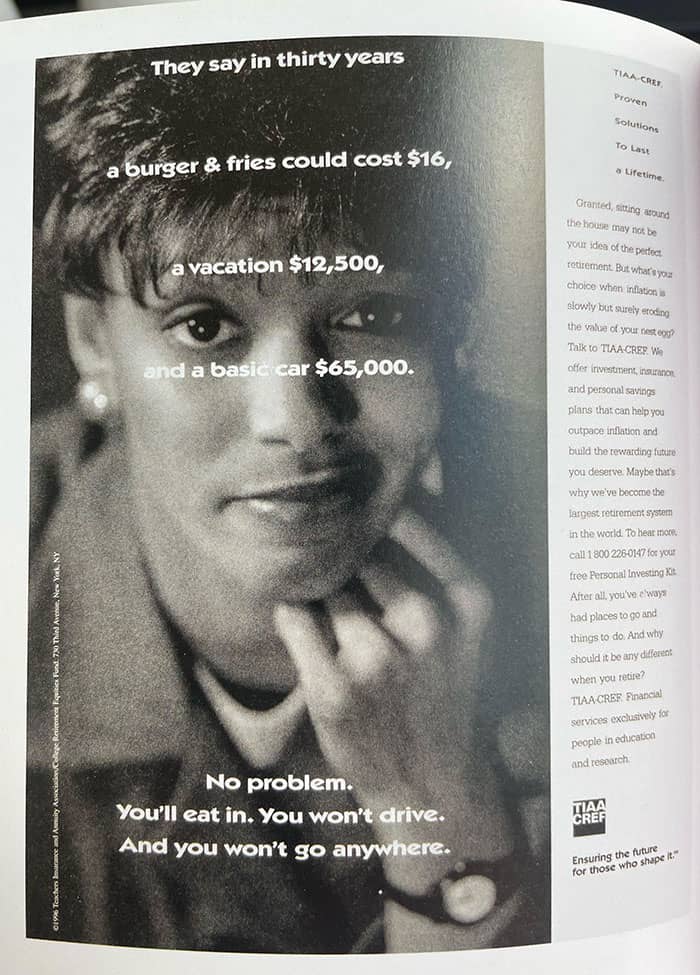
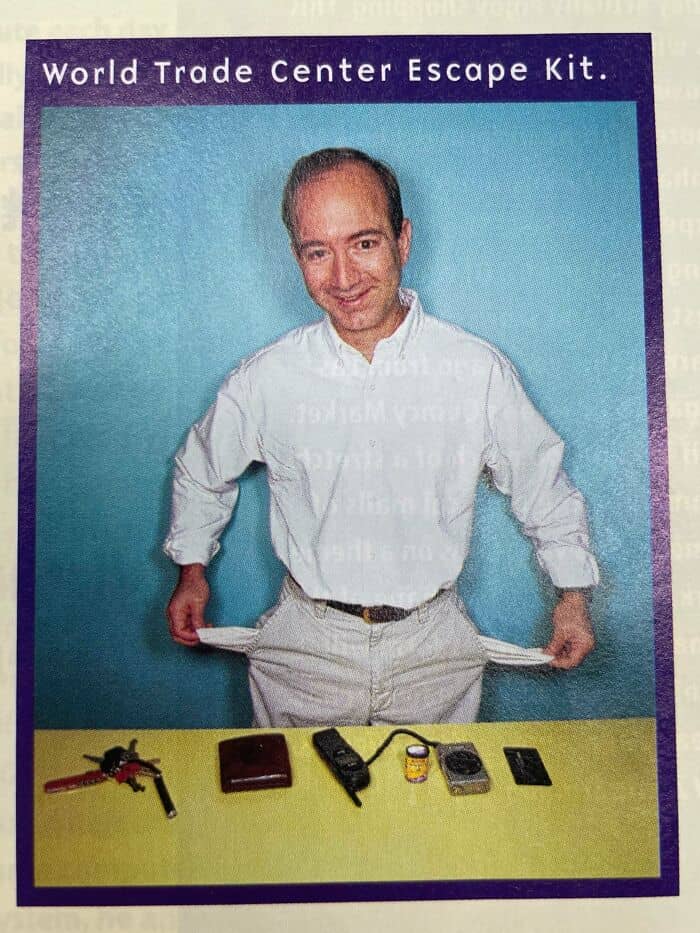
#1 An Eerily Accurate Ad From 1996 I Found In An Advertising Book
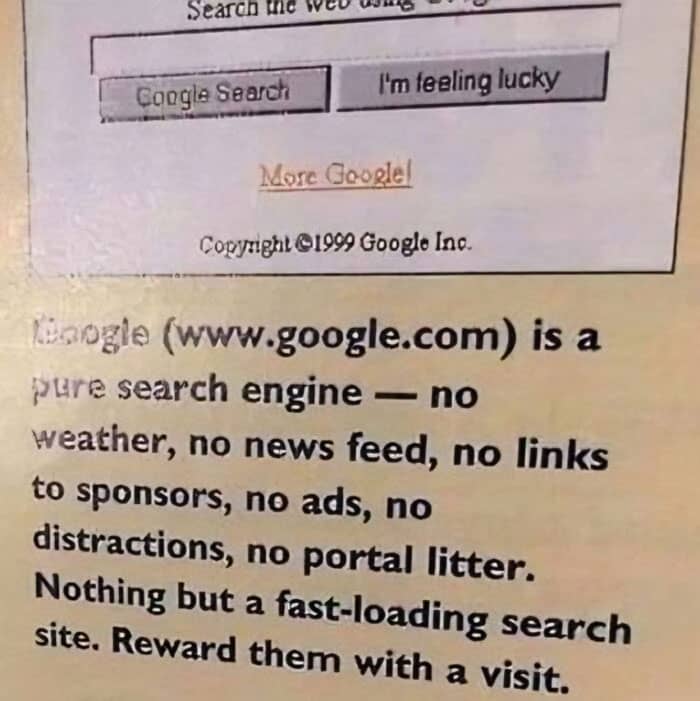
#2 This Has Aged Like Milk Because Google Is A Search Engine With Weather, News Feeds, Links To Sponsors, Ads, And Distractions
#3 An Ad From The 1950s Gives Tips On How To Dispose Of Batteries
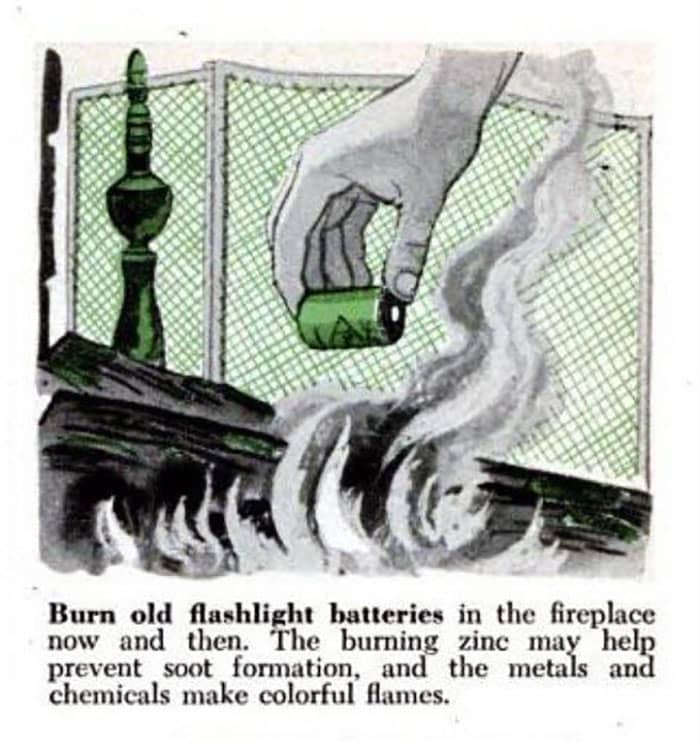
The ad advises getting rid of batteries by tossing them in the fireplace, but we know now that doing that is extremely dangerous.
Many products advertised in these vintage ads seem questionable today. However, people did many questionable things back in the day: advised pregnant women to smoke to relieve stress, gave babies alcohol to make them sleep better, and many others.
But the ads praising harmful materials like lead and asbestos probably take the crown of absurdity. How is it possible that marketers advertised them as “amazing” and people thought it was okay?
Back in the late ’70s, people used asbestos in many common household and construction items: hair dryers, kitchen appliances, plumbing, floors, and, of course, roofs.
Today, it’s still used for occupational gear and clothing, but most countries have banned many different forms of asbestos. The U.S.bannedthe last type, chrysotile asbestos, in 2024.
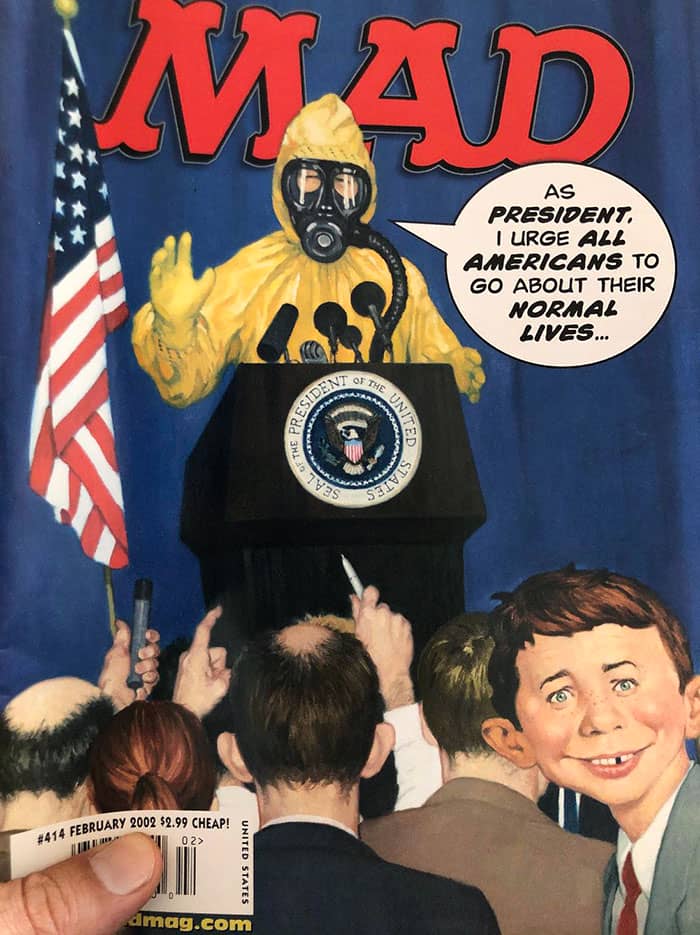
#4 Mad Magazine From 2002. Covid Flashbacks
#5 Nowadays, Kids Will Never Understand The Struggle Of People Trying To Connect To The Internet Using A Phone Line And The Bothering Sounds Of The Whole Process
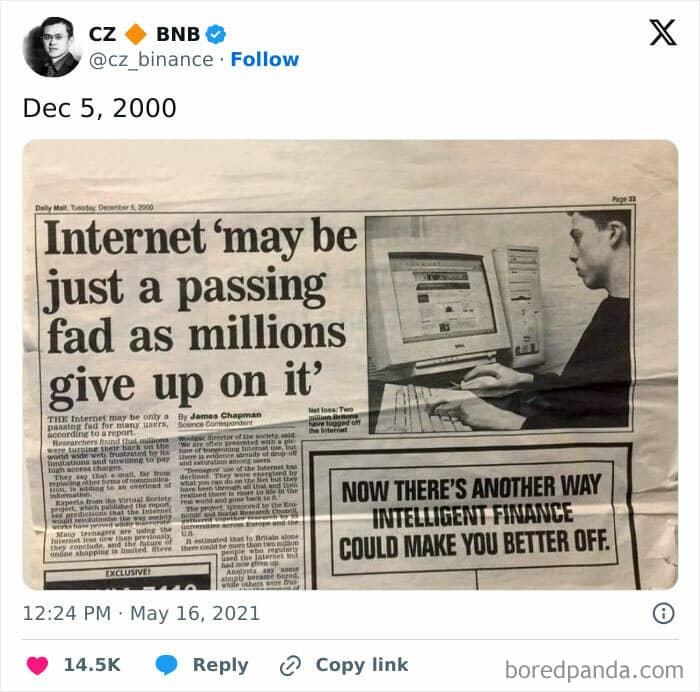
#6 Photography Ad In My Dad’s Old Yearbook
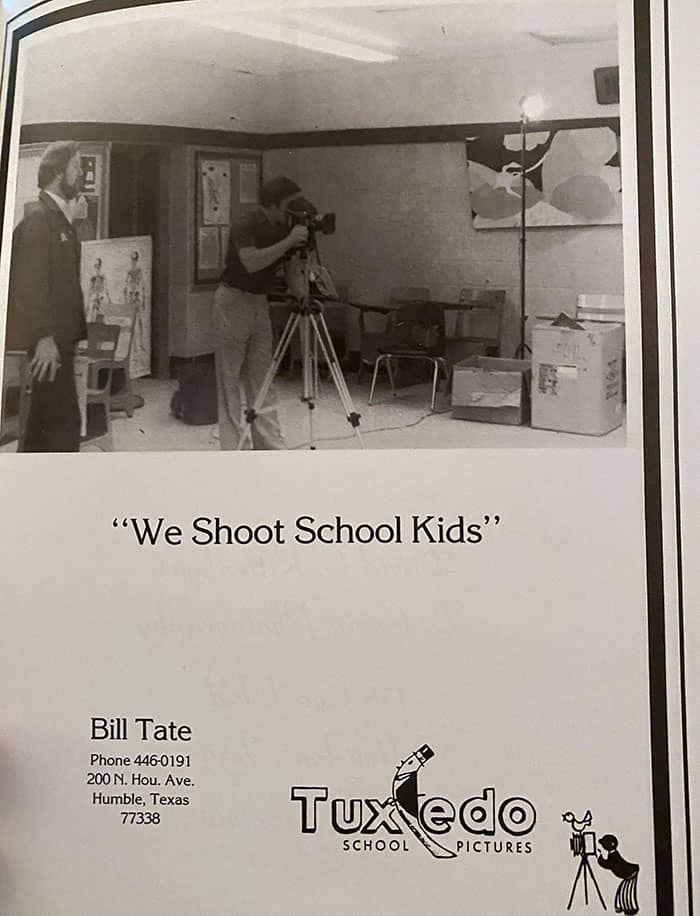
This was from the year 1982, when the photography company said "We shoot school kids" in an ad before the number of school shootings in the US increased.
The material was (and still is in some countries) popular due to its durability and fire resistance. It’s also pretty affordable. However, microscopic asbestos fibers are incredibly dangerous to our lungs.
They cause healthy lung tissue to scar or mutate asbestosis, mesothelioma, and lung cancer. In fact, it’sclassifiedas a known human carcinogen by The U.S. Department of Health and Human Services.
But why were the ads for asbestosso popularback in the second half of the 20th century? Apparently, industry leaders did their best to suppress any medical evidence linking asbestos to all the above-mentioned horrible diseases.
Advertisers positioned the toxic material as something futuristic and affordable for home makeover projects. And the flashy, fun commercials and ads got to people — they really believed this was the natural mineral of the future.
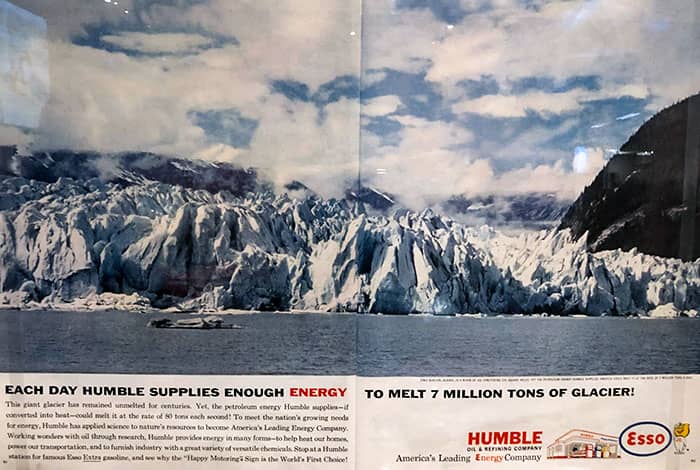
#7 This Ad From Esso. Now We Have A Global Warming
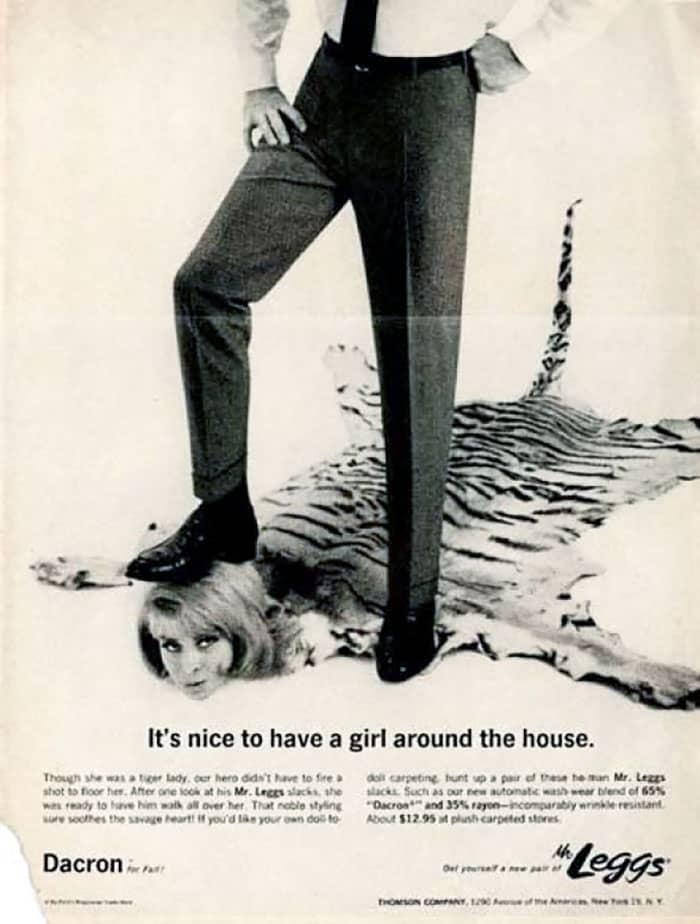
#8 A Sexist Vintage Ad Advertising Men’s Slacks Called Mr. Legs. “He Didn’t Have To Shoot To Floor Her. One Look At His Pants, And She Was Happy To Have Him Walk All Over Her”
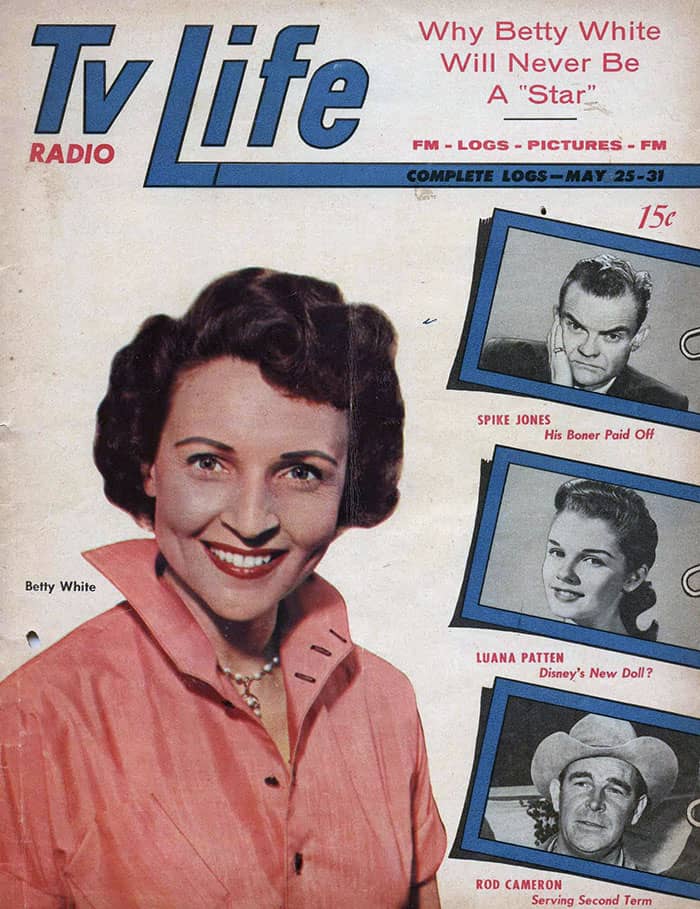
#9 Betty White Became A Hugely Famous, Beloved And Iconic Actress
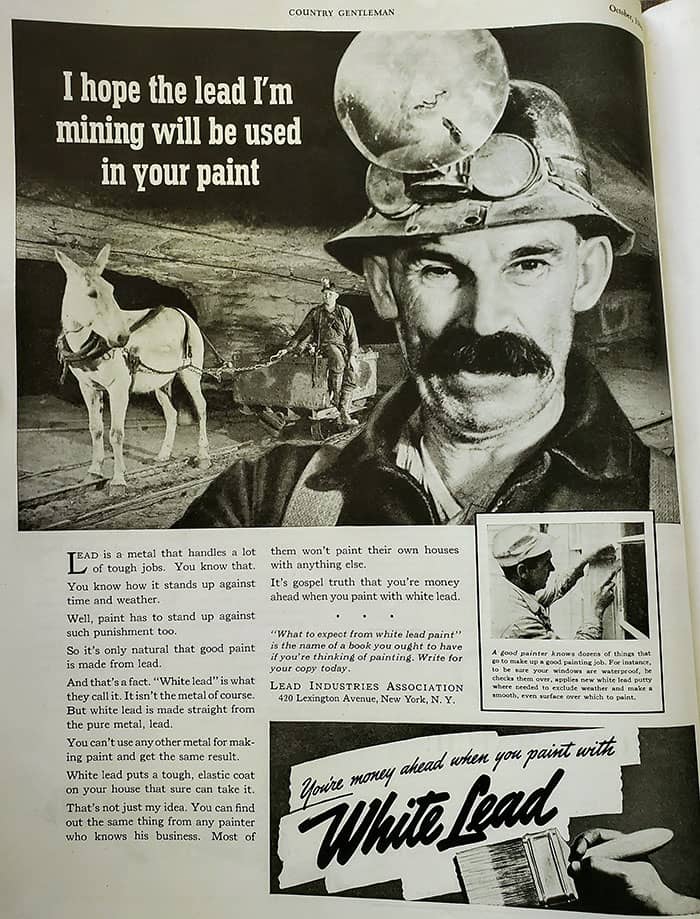
Similarly, people once saw lead as a miracle metal as well. Most of us probably know about the dangers of lead in paint. In the 20th century, white lead paint was incredibly popular. Because it absorbs 12 to 15 times less water than zinc oxide, it is very durable. Back in the 1910s, the authorities advised people to wash their walls regularly because of the Spanish Influenza. So, lead paint was particularly handy in that regard.
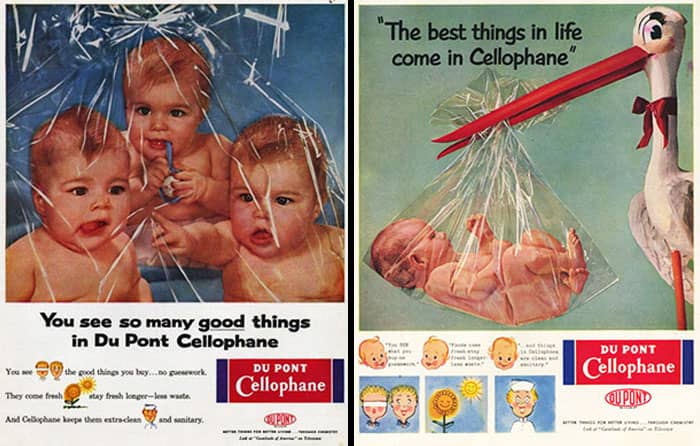
#10 People Inventing Plastic Bags Were Trying To Claim Consumers By Advertising The “Cute” Use Of Plastic Bags For Delivering Children, Which Are Now Known To Be Suffocants
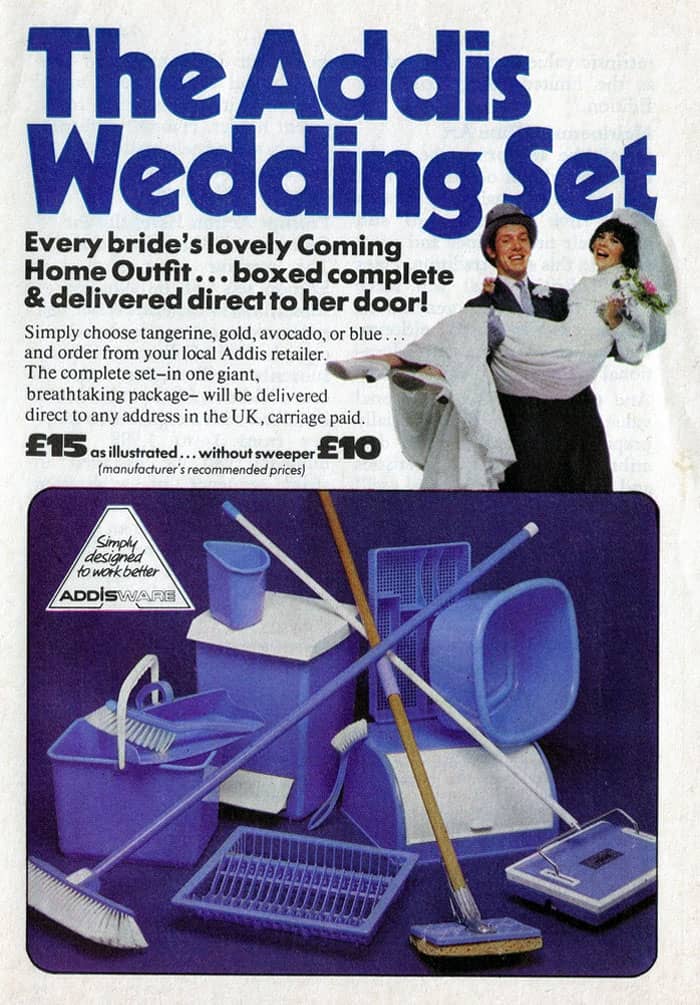
#11 The Addis Wedding Set, “Every Bride’s Coming Home Outfit” 1980s
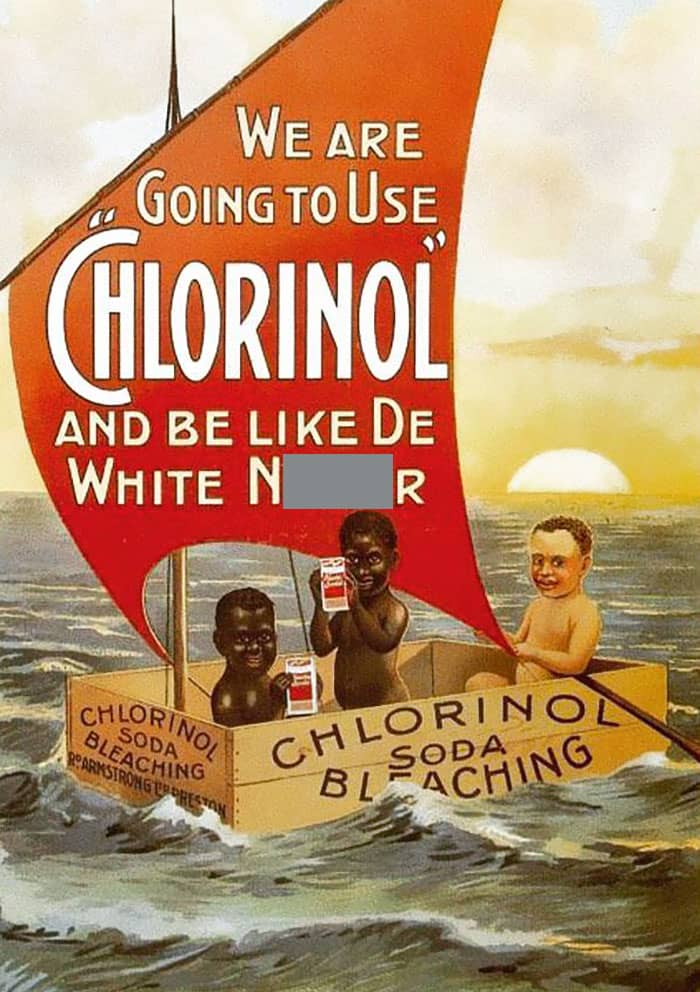
#12 Vintage Chlorinol Bleaching Advertisement. Very Racist, And Unacceptable
Even the numerous state and federal agencies urged people to use lead paint. Whatchanged their tunewas the growing number of lead poisoning cases in children in the 1930s. The authorities advised parents not to use the paint on toys, baby carriages, and cribs.
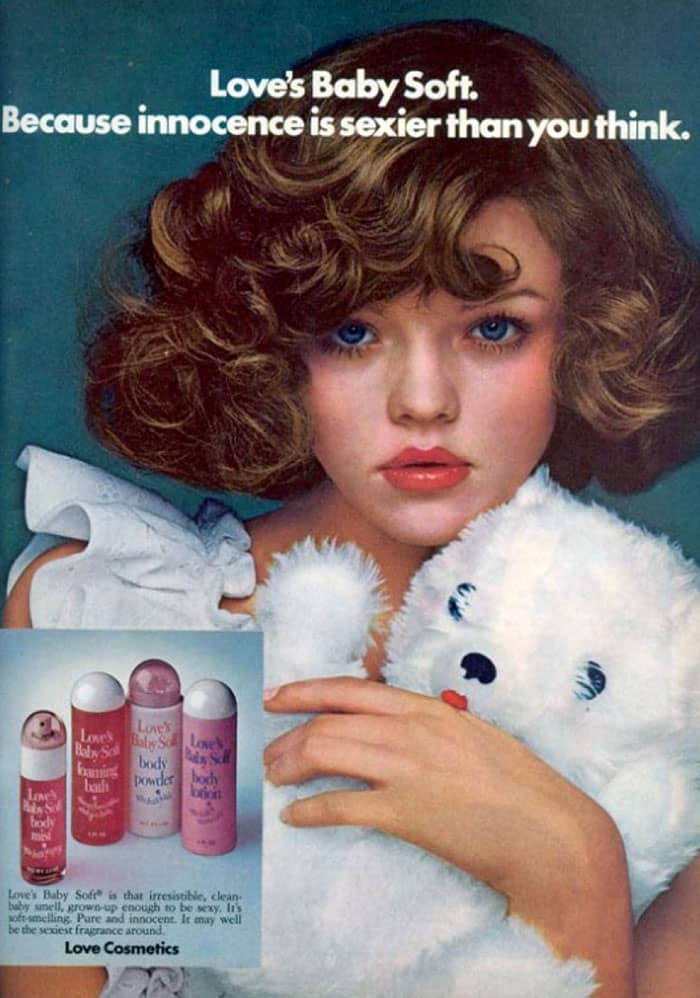
#13 Creepy Advertisement For Love’s Baby Soft (1975)
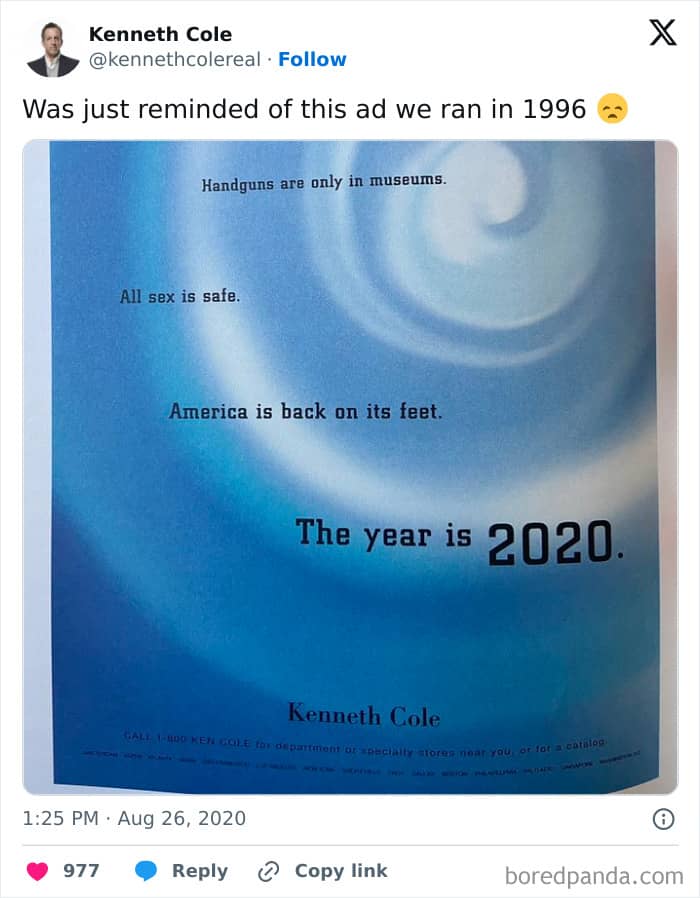
#14 Sadly, Everything Is Worse Now
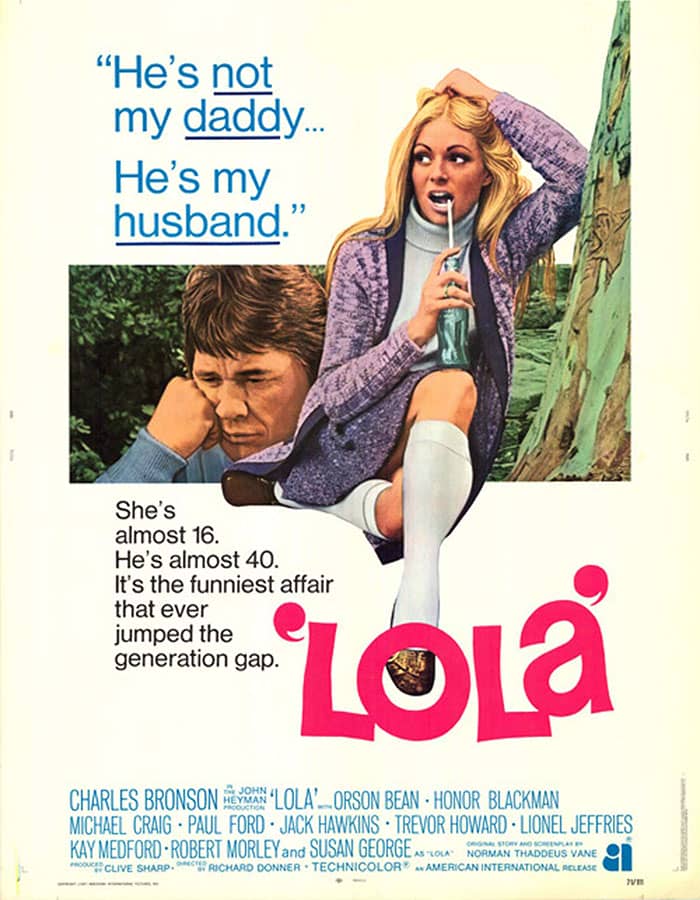
#15 Lola (1970) Would Never Be Made Today For Many Reasons
However, children would still get poisoned from the paint on the walls. The government onlytook serious actionin the 1970s, though. Lobbyists and advertisers did their best to mislead people and make them believe it was not as toxic. Today, we use lead in batteries; three-quarters are actually found in all types of vehicles.
#16 Imagine Seeing An Ad Like This Today
#17 Iranian Advertising Before The Islamic Revolution, 1979

#18 “He Used To Duck Me, Now He Dates Me” Nadinola Bleaching Cream, Ebony Magazine, May 1963

Interestingly, the Romansused leadin more ways than the modern 20th-century society. They lined aqueducts and water pipes with lead and also put it in makeup, cookware, and even contraceptives. Perhaps the most surprising use of lead in Ancient Rome was as a sweetener for food and drinks but also to control fermentation in wine. That’s actually why kids sometimes chewed on lead paint chips: it can taste sweet.
#19 This Ad In 1936
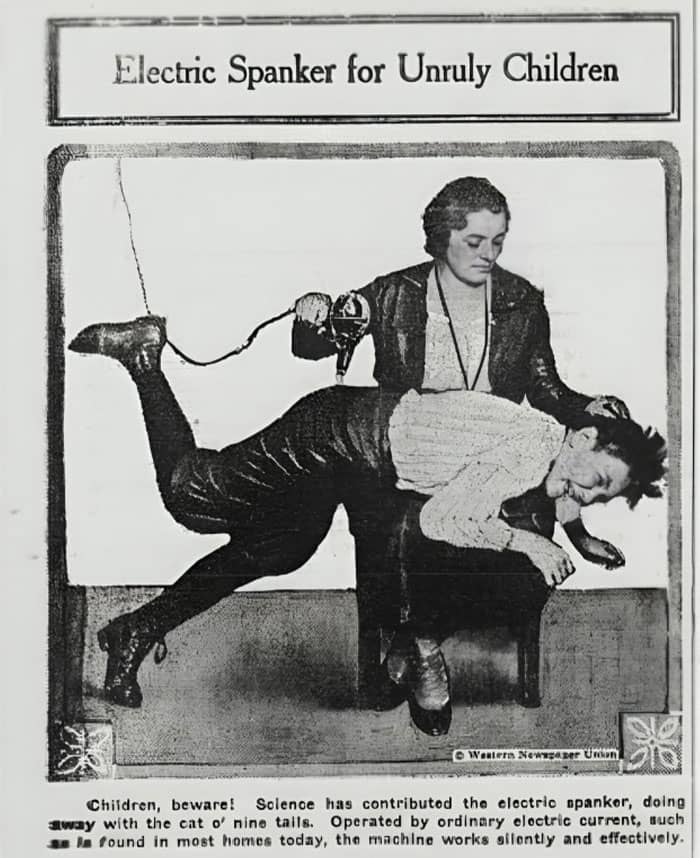
#20 An Electric Spanker For Unruly Children
#21 This 1994 Advertisement For Lighter Skis
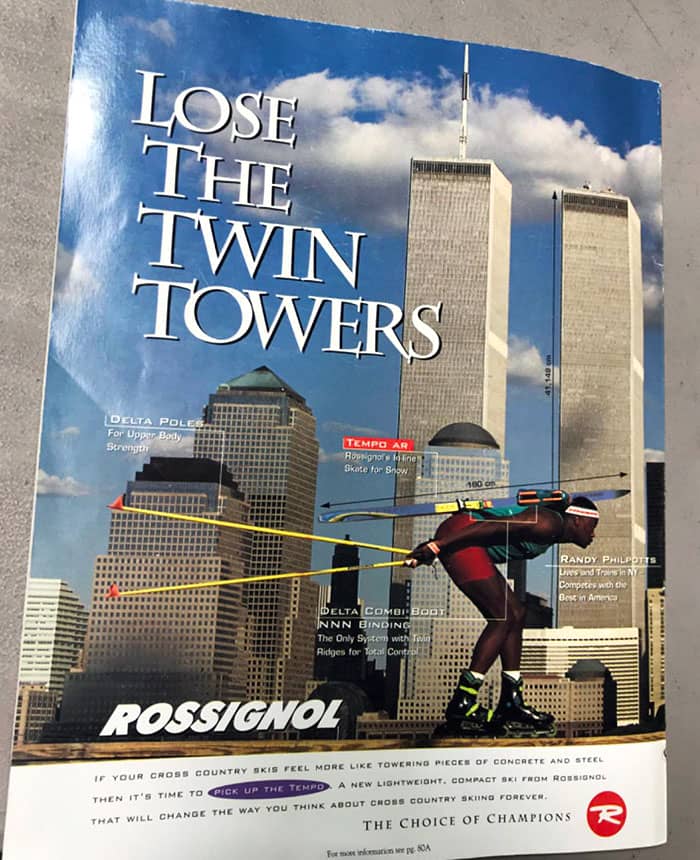
The ad compares buying lighter ski equipment to "Losing the Twin Towers," which eventually happened on 9/11, about 7 years after this was published.
Today, we’re way more careful about the way we handle lead. The batteries get assembled in sequestered plants, with employees wearing face masks. The majority of the work is also done by robots.
Steven Jones, plant manager at EnerSys, told NPR that the manufacturing process is a technological ballet. “Through this level of automation, we’re providing a cleaner environment for our operators and again, providing a safer environment.”
#22 Union Carbide Advertisement From 1962 “Science Helps Us Build A New India”
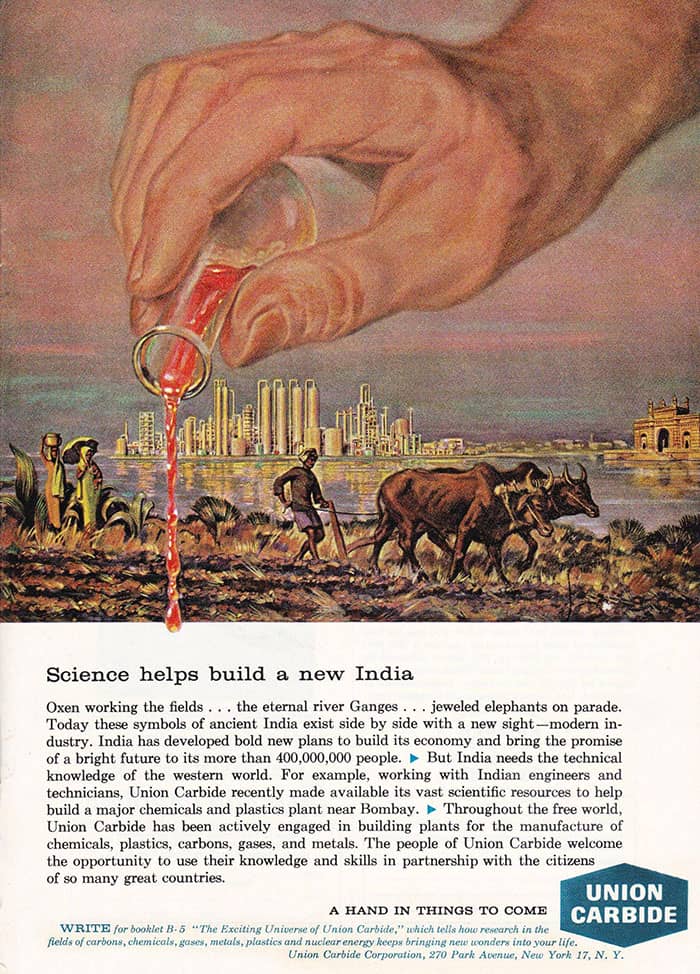
The 1984 Bhopal gas tragedy at the Union Carbide India Limited (UCIL) pesticide plant in Bhopal, Madhya Pradesh, India. It is considered one of the world's worst industrial disasters. The parent company had to sell its entire stake in UCIL and leave India.
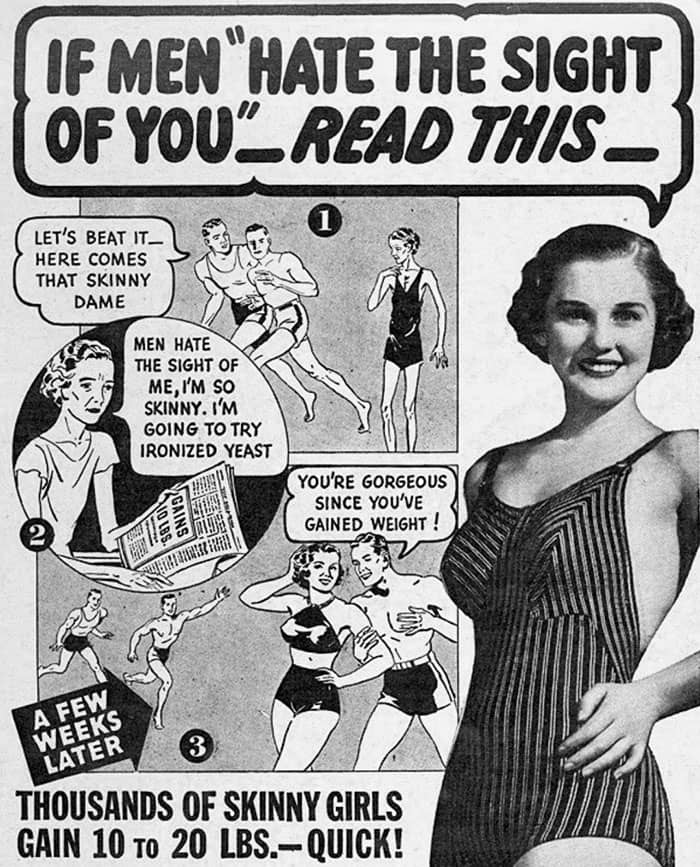
#23 Ironized Yeast Ad For Weight Gain In The 1930s
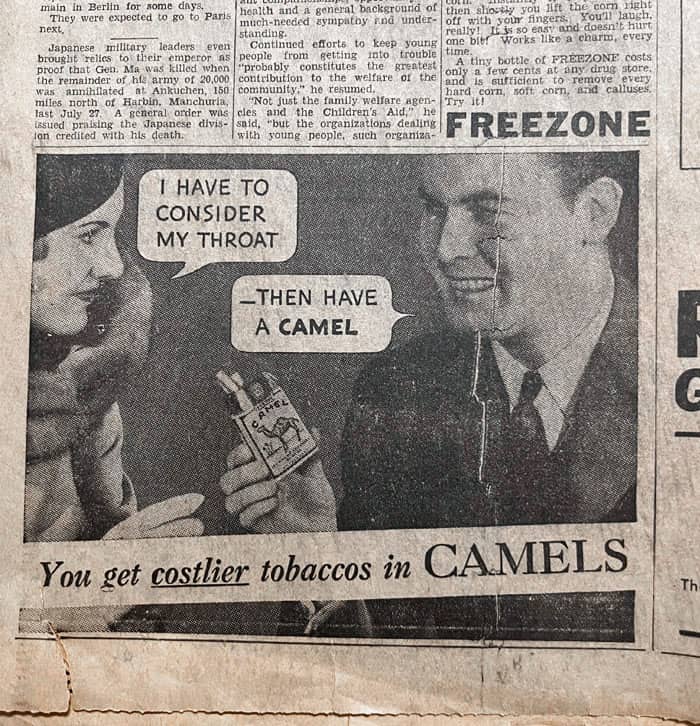
#24 1950s Cigarette Ad Claiming No Throat Irritation Comes From Camel Cigarettes. Now It’s Proven That It Causes Throat And Lung Cancer
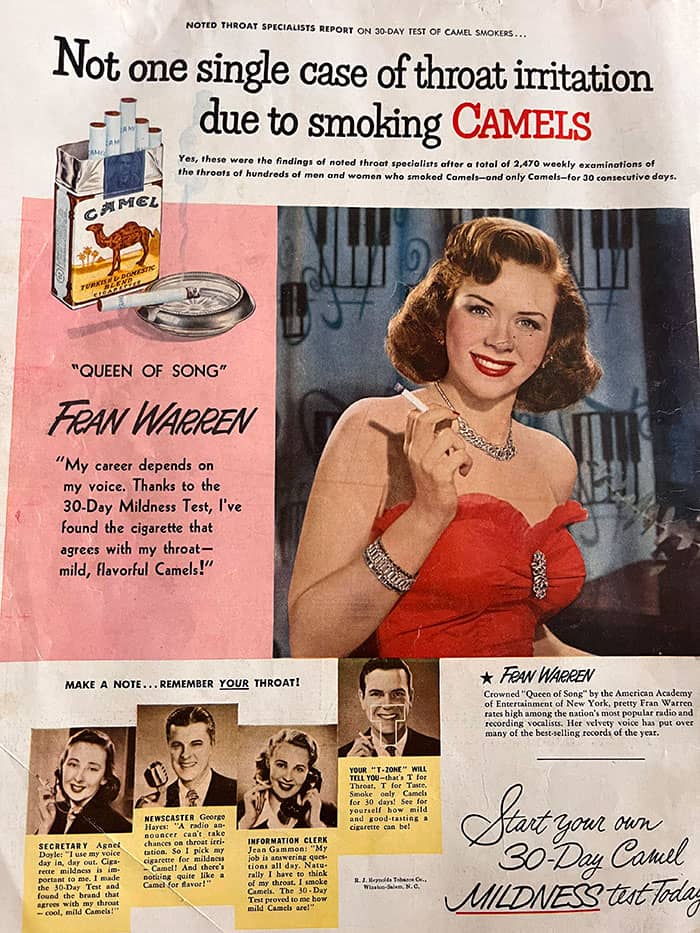
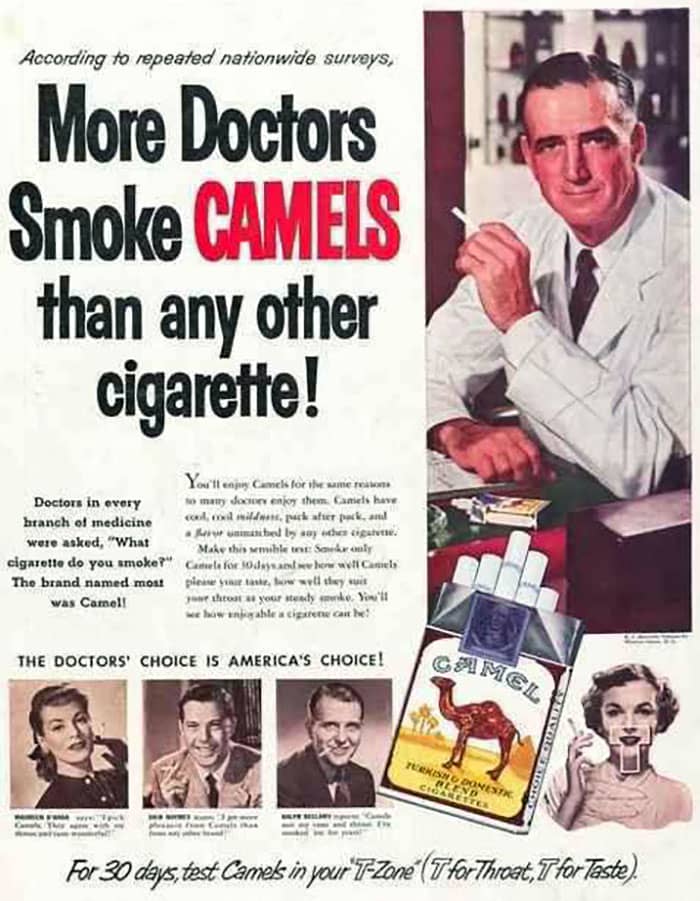
Cigarette companies also don’t have a good track record when it comes to advertising. A 1946 Camel ad, for example,claimedthat doctors, according to an “independent survey,” recommend smoking.
An even more crazy 1890 advertisementclaimedthat cigarettes can help treat asthma and other respiratory ailments. They even recommended giving them to kids older than six. Many similar ads touted the benefits of smoking: less irritation, child-friendly, and one even claimed cigarettes were “pure as the water you drink.”
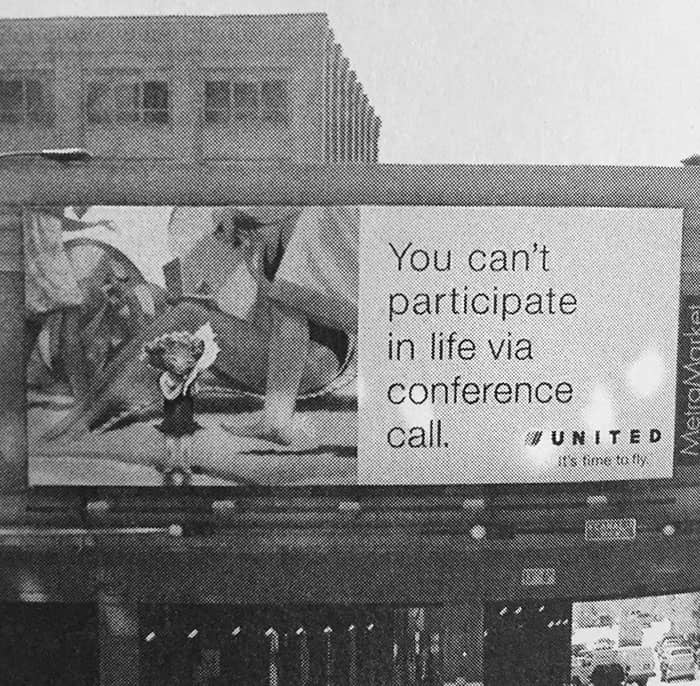
#25 Advertisement For United Airlines (About 15 Years Ago)
#26 An Ad From An American Magazine, 1939. Lead Was Banned In Most European Countries By The 1940s, But Not Until 1978 In The US Because Of Lobbying
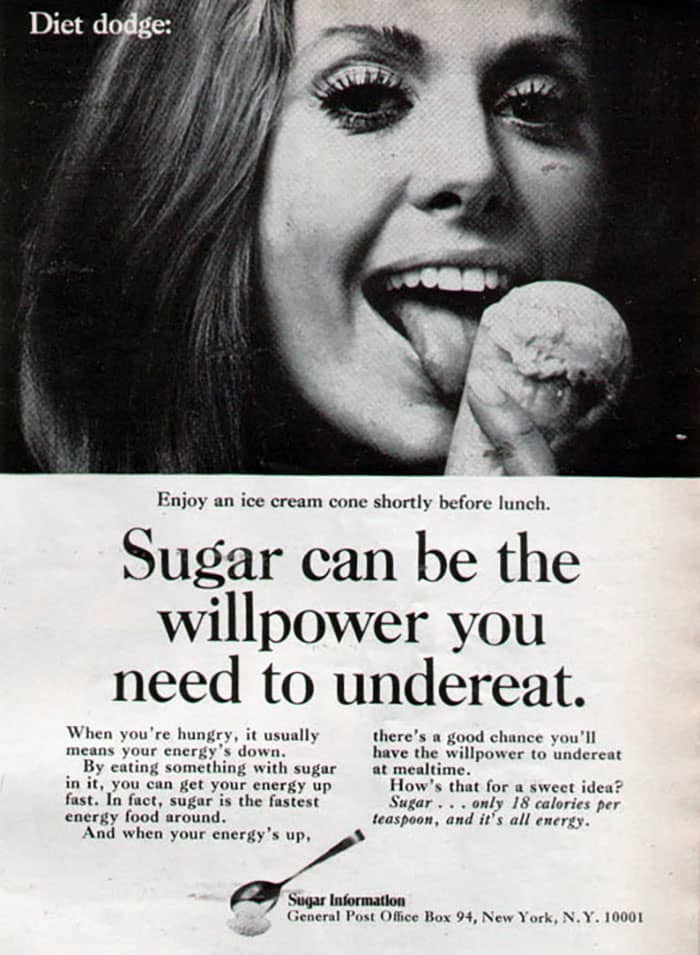
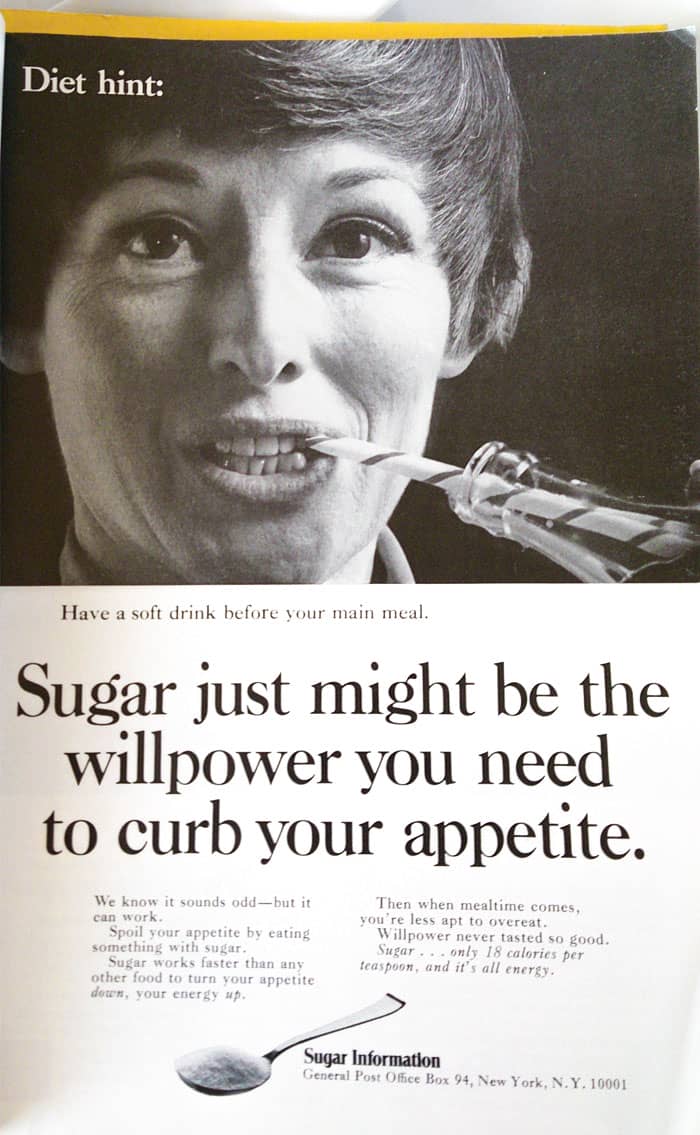
#27 Promoting Sugar As A Healthy Thing In 1971
Olympic Athlete Jesse Owens was the face of White Owl cigars in 1960. Sadly but ironically, he passed away from lung cancer in 1980. The first serious report warning the public about the dangers of smokingcame outin 1962.
In 1964, the U.S. Surgeon General did the same. The U.S. government firsttook actionin 1965, requiring manufacturers to include information for consumers about the dangers of smoking on the label.
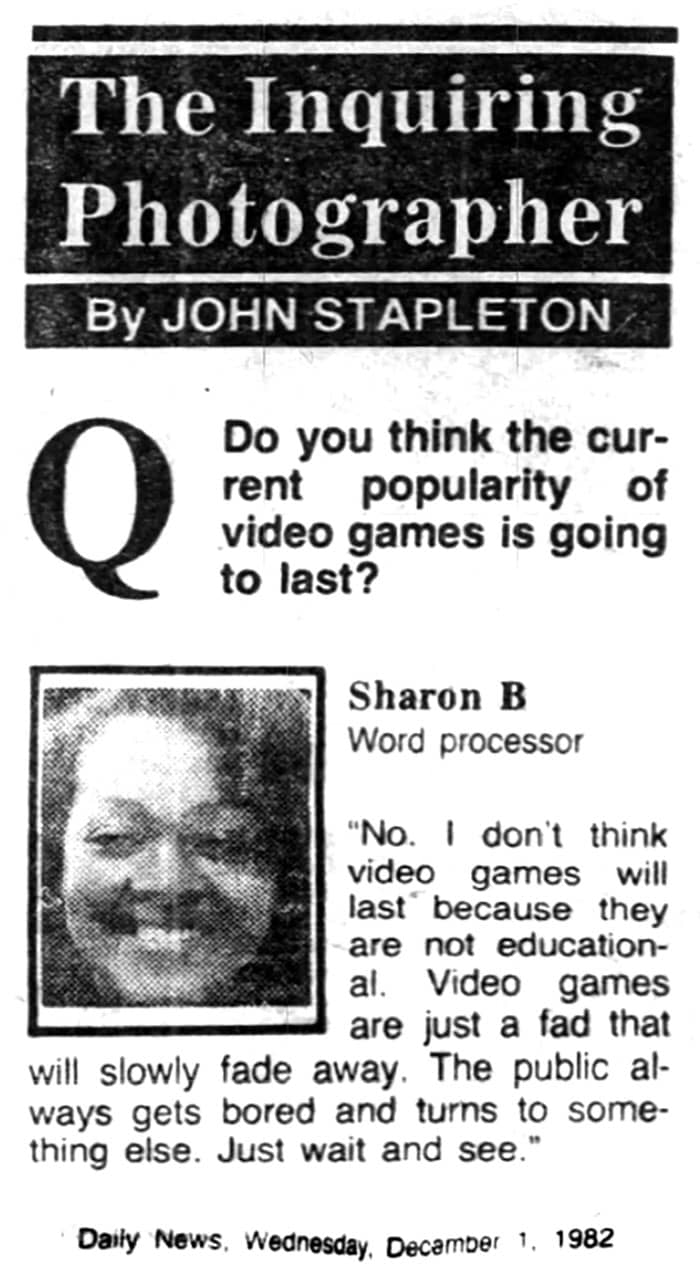
#28 Well, She Was Very Wrong
#29 “Successful Marriages Start In The Kitchen”

#30 Ad On The Back Of An Old Comic. Nowadays, This Would Not Go Well

This is an advertisement for a child to purchase a toy rifle, touting its realistic look and sound. A child carrying this toy today would be very poorly received.
All these examples from the past can make one wonder: weren’t there any policies against false advertising back in the day? Not really, at least until the 1970s. People’s mistrust of advertisingwas risingby then.
That’s when the FTC also started a regulation revolution — at last, they were asking marketers to prove the validity of their claims. They also cracked down on advertising toward children. Whereas advertisers enjoyed their unchecked privilege before, now they have more responsibility.
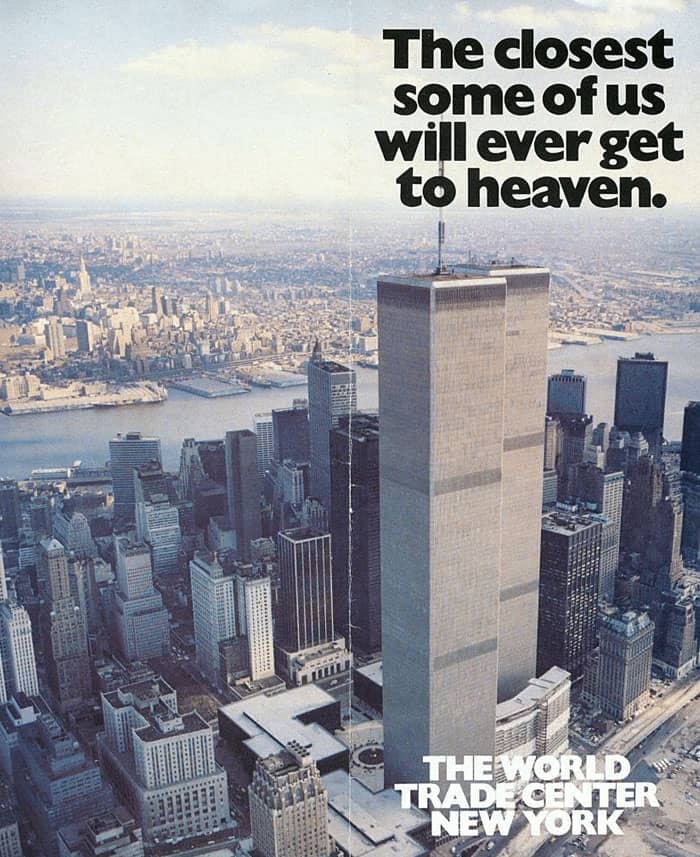
#31 Twin Towers World Trade Center Brochure Circa 1975
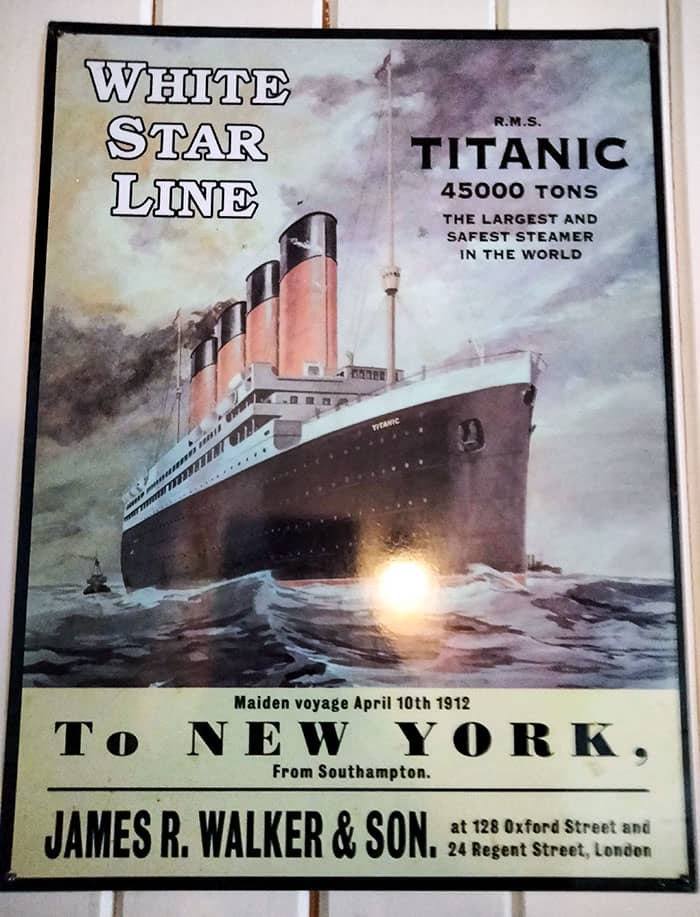
#32 In The Top Right Corner, It Says “The Largest And Safest Steamer In The World,” Only For It To Hit An Iceberg Later. Clearly, It Wasn’t Safe
#33 Creepy Old Lysol Advertisement
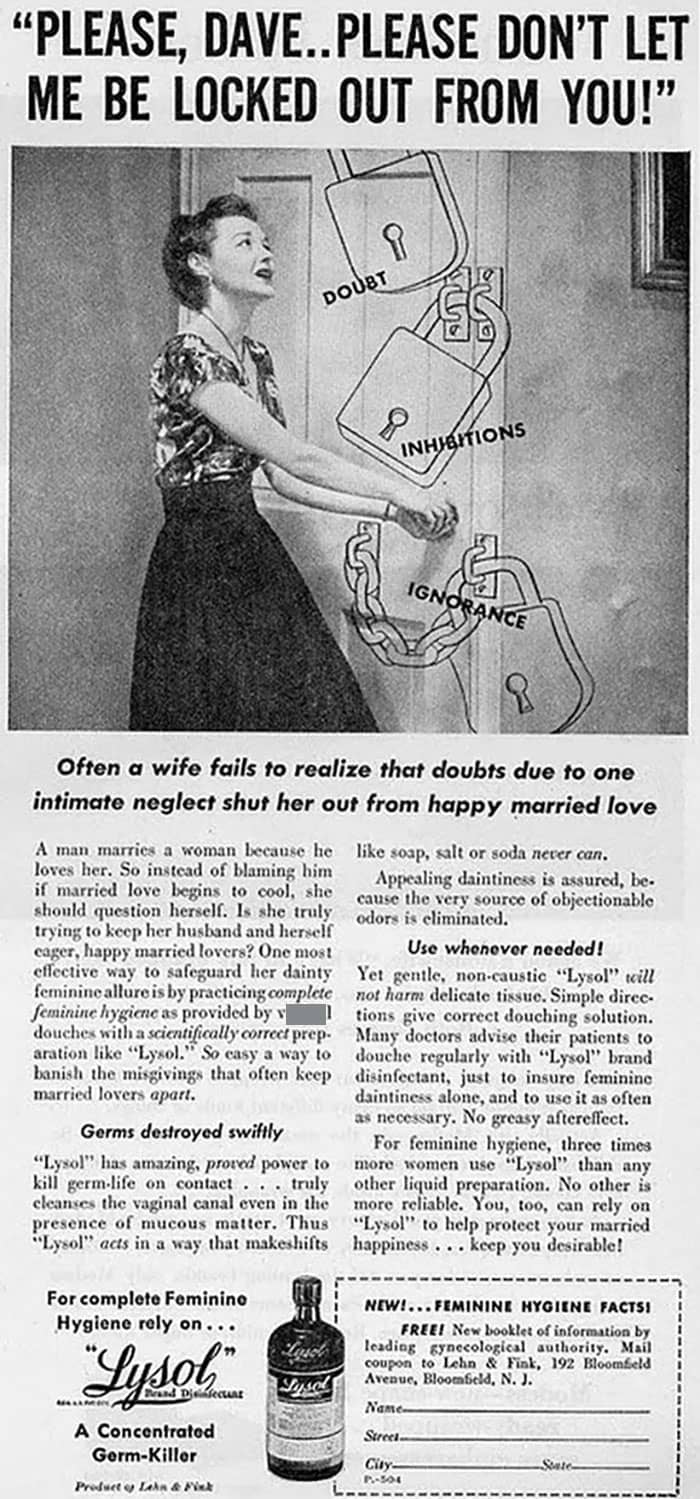
Lysol used to be used as a means of birth control before the pill was legalized in the 1960s. That's what they mean by "dainty feminine allure," having the energy to be a loving wife without the babies.
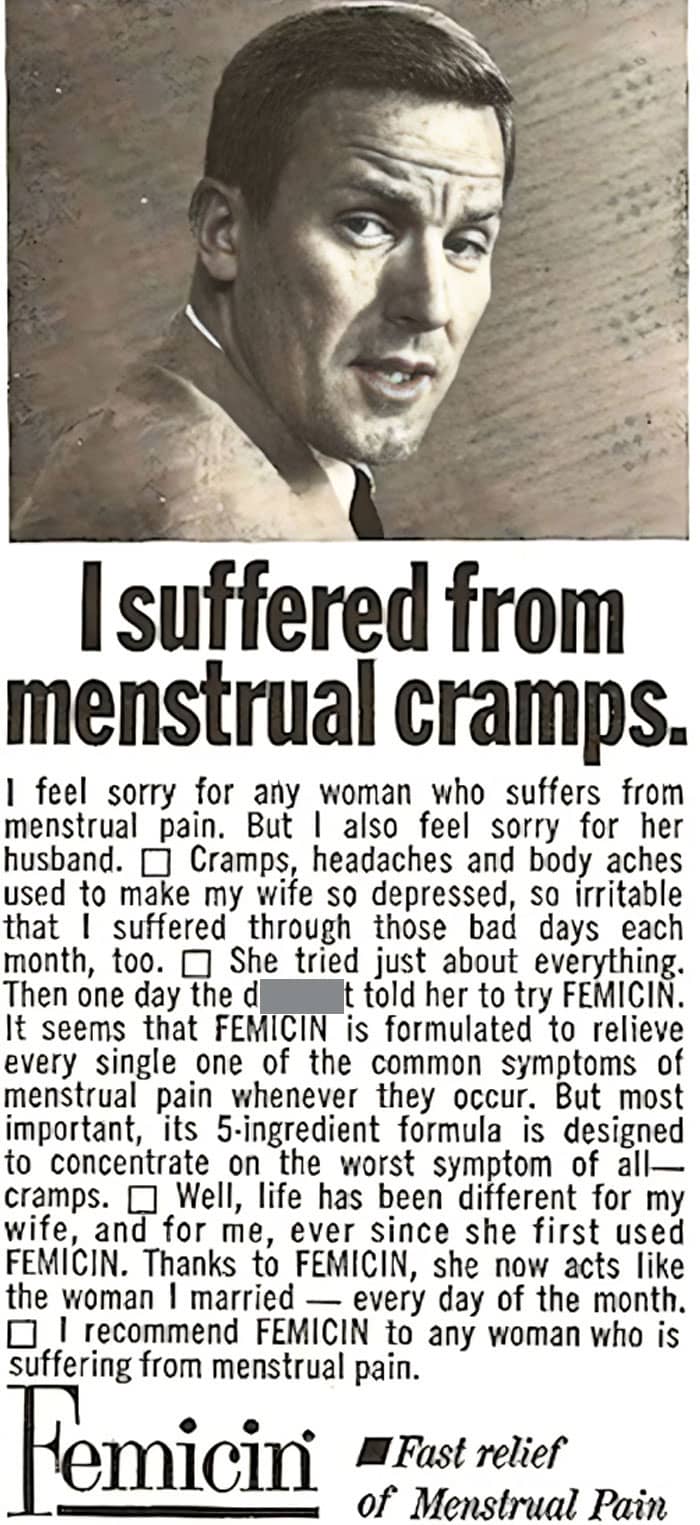
#34 “I Suffered From Menstrual Cramps.” – When Men “Suffered” As Much As Women (1968, Femicin Ad)
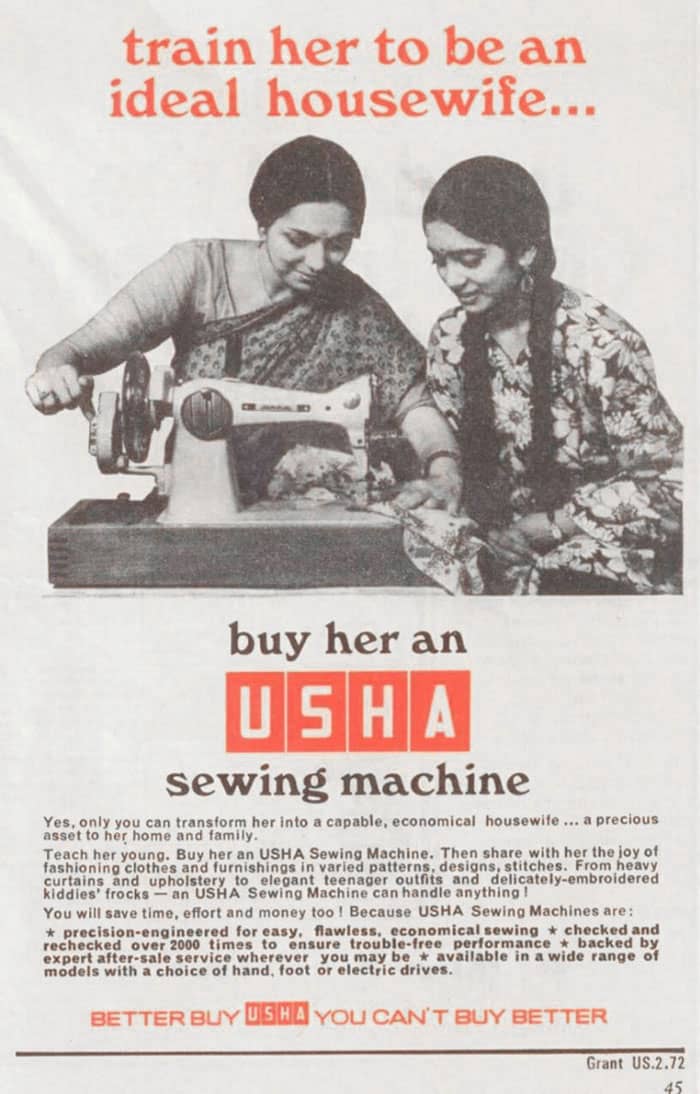
#35 USHA Sewing Machine Ad From The 1970s: “Train Her To Be An Ideal Housewife. Buy Her An USHA Sewing Machine”
#36 This Oil-Disposal Tip
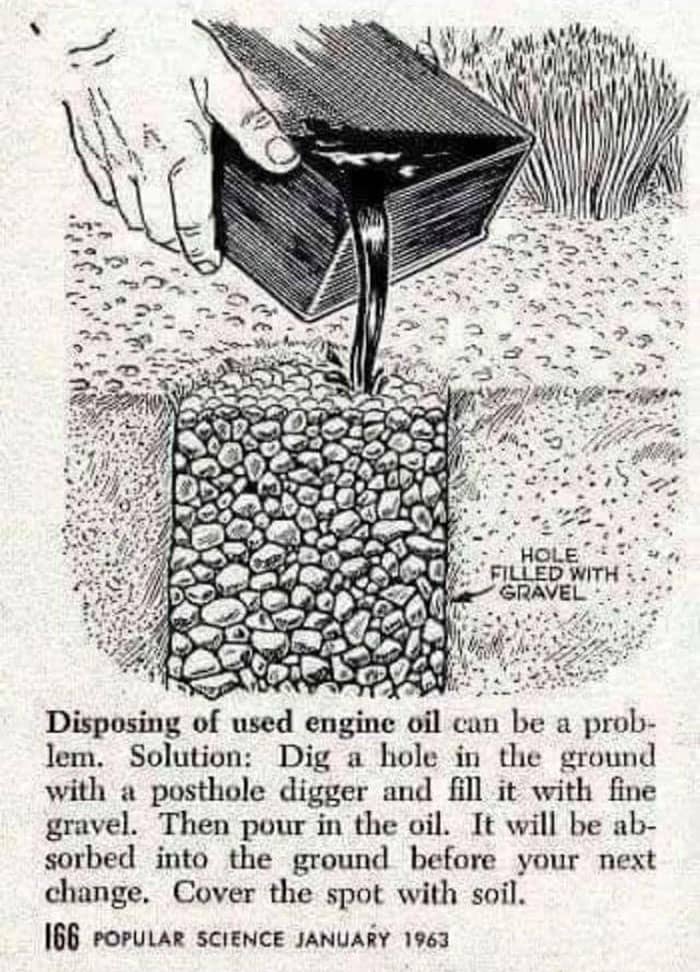
Terrible advice on how to dig a hole in your garden to dispose of engine oil and let it be absorbed into the soil.
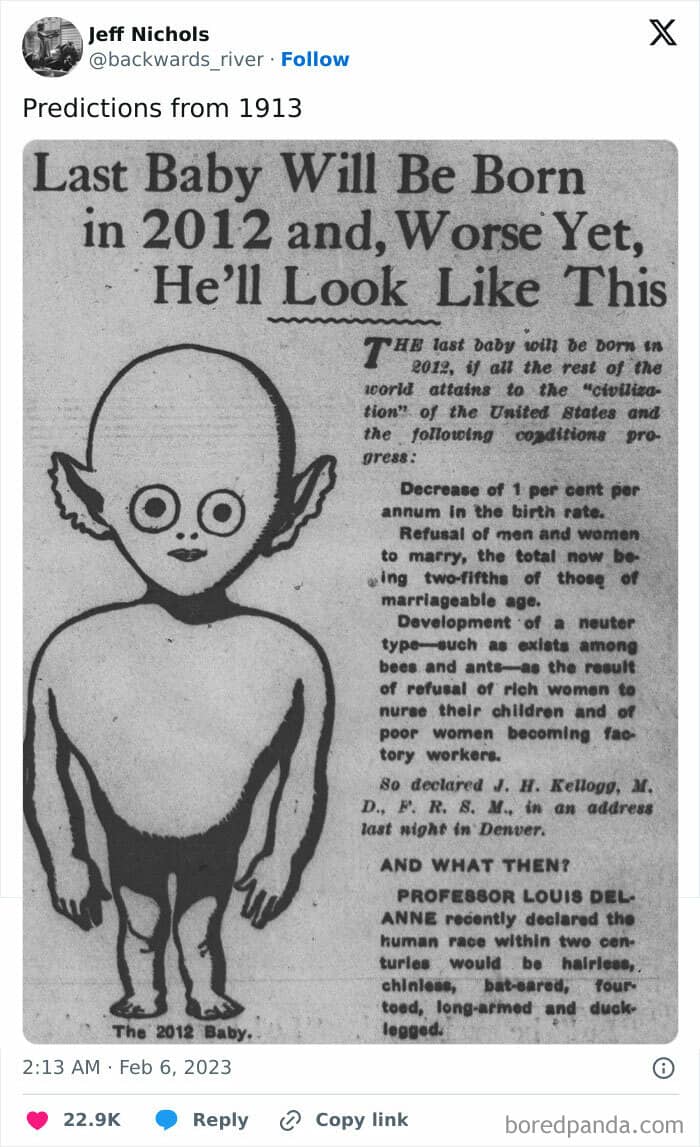
#37 In 1913, Someone Predicted That Birth Rates Would Have Declined All The Way To Zero By Now, And We’d Look Like Aliens Because Of Baby Formula
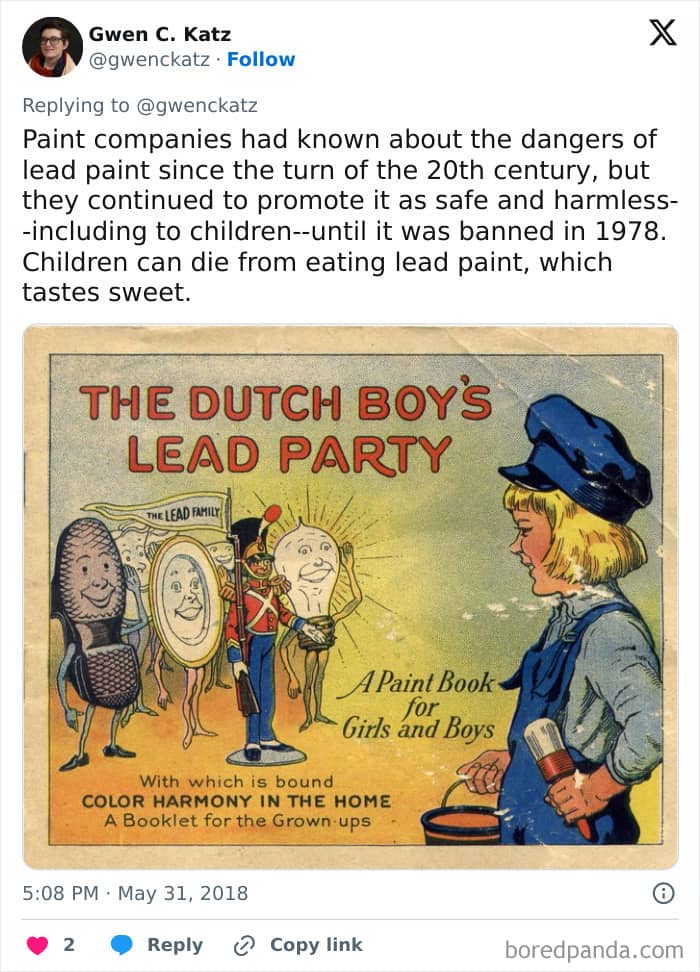
#38 Lead Was Used Extensively Before Being Banned In The US. This Ad Captures How Lead Was Extremely Frequent In Everyday Life
#39 6 Kids At 22? The Astonishing Mrs. Highfield For Rinso’s Soap. Australia, 1953

#40 Vintage Cigarette Print Ad Touting It Is Popular Among Doctors, Which Is Supposedly A Good Thing And Somehow Probably Helps Health
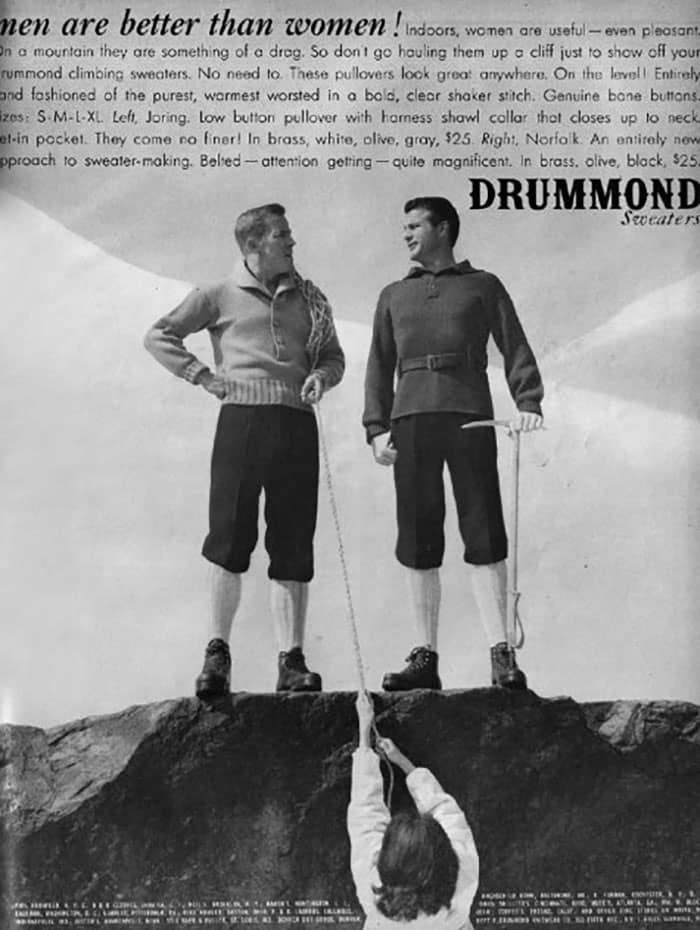
#41 An Ad For Drummond Sweaters From 1959. Oh, How Advertising Has Changed
#42 Lorillard’s Chewing Tobacco, 1893

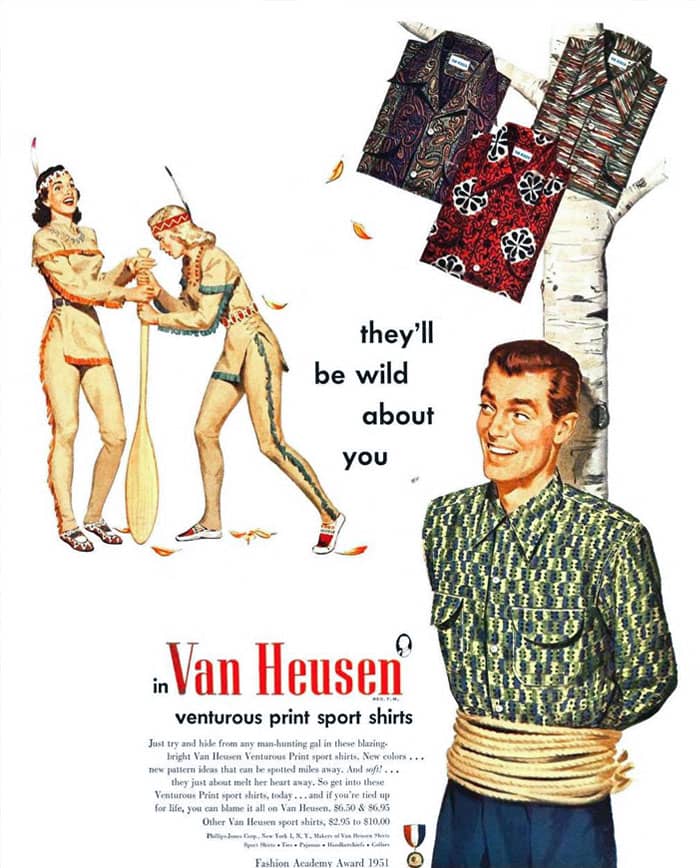
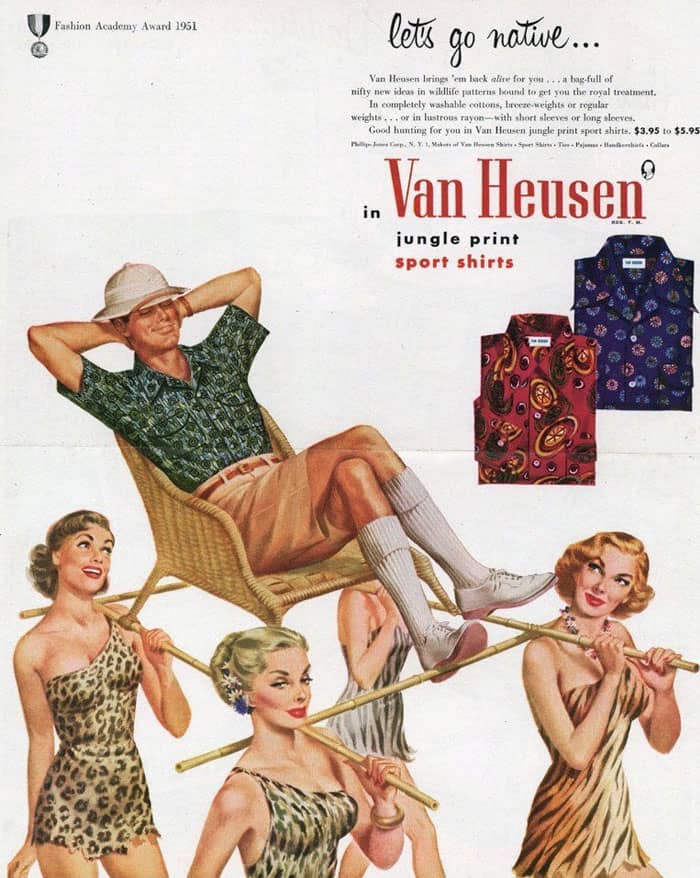
#43 “They’ll Be Wild About You In Van Heusen Venturous Print Sport Shirts” (1951)
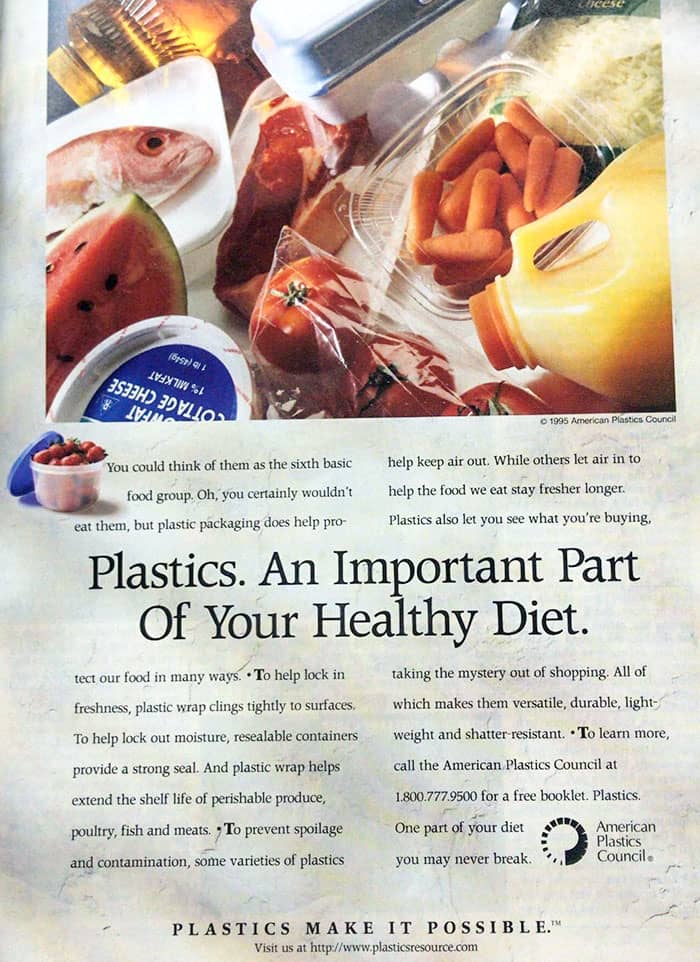
#44 This Ad From Time Magazine In 1997 Promotes Plastic. Meanwhile, People Are Trying To Replace Plastic Because It’s Harmful To The Environment
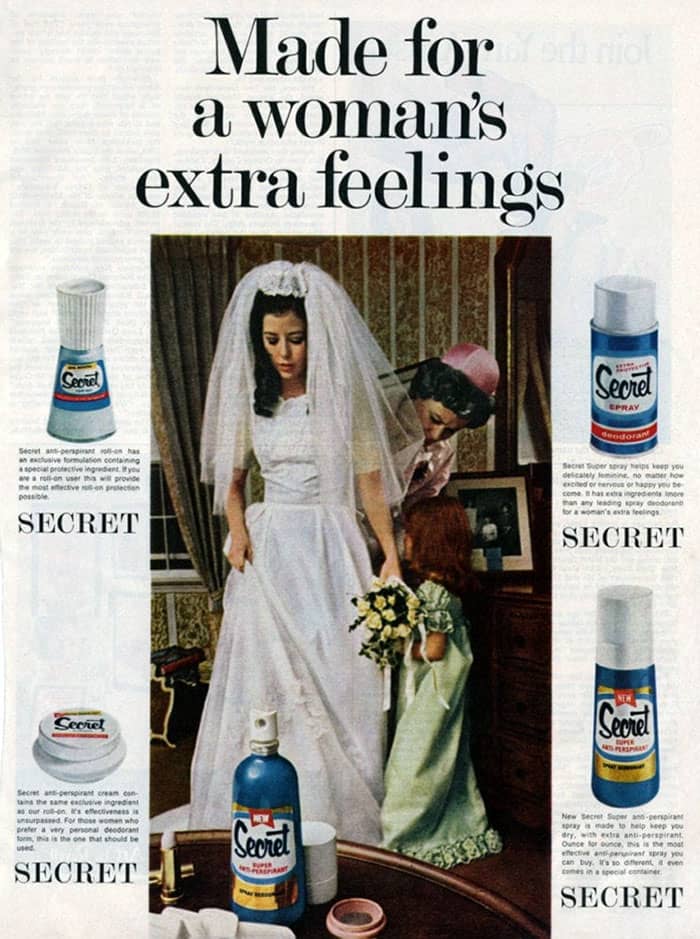
#45 Secret Anti-Perspirant Ad In 1965. It Implies That Women’s Body Odor Is A Result Of Emotions
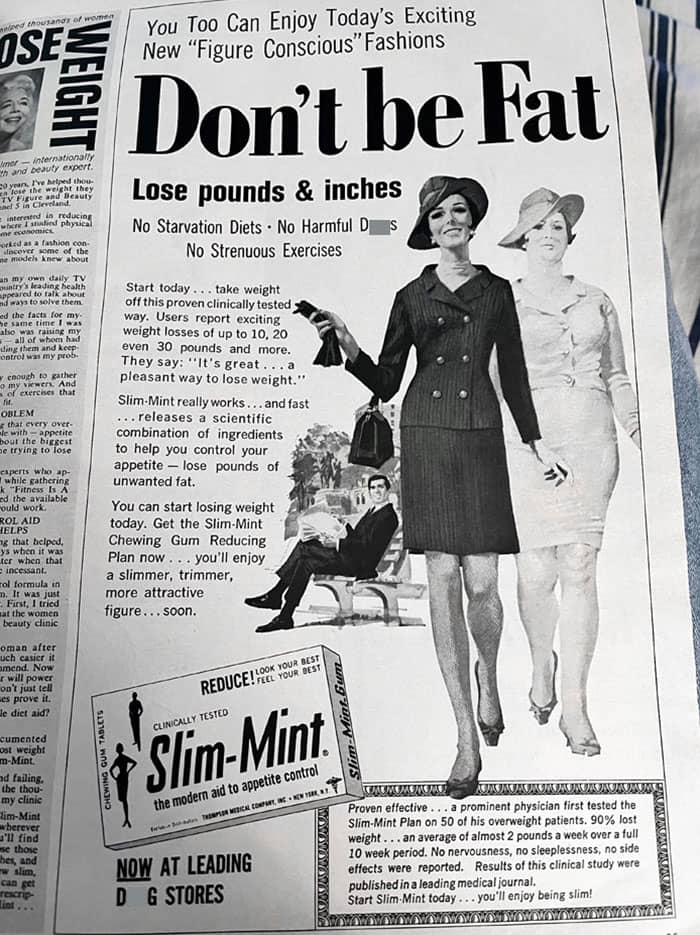
#46 The Message Is Perfectly Simple: Just Stop Being Fat
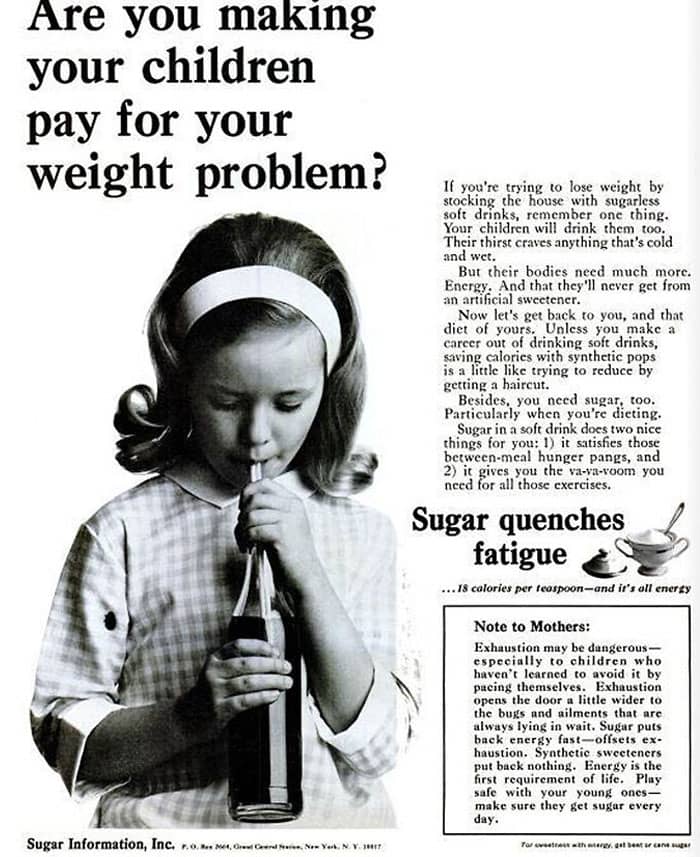
#47 “Are You Making Your Children Pay For Your Weight Problem?” – Sugar Information, Inc. Ad (1966)
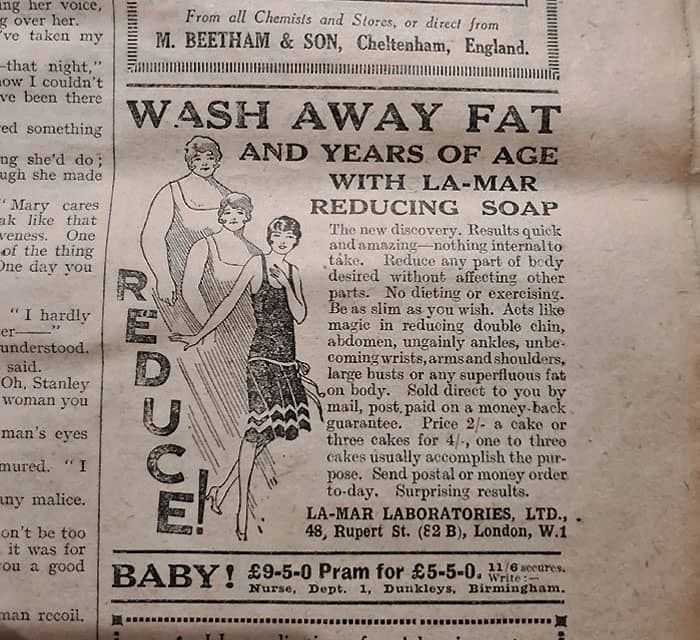
#48 Wash Away Fat And Years Of Age With La-Mar Reducing Soap. Woman’s Companion, 1923
#49 Probably The Most Sexist Vintage Ad On The Internet

#50 This 1968 Frigidaire Ad Is Special

#51 Samsung Ad From 1989 Predicting The Best VCR To Play The Most Popular Movies Of 2007
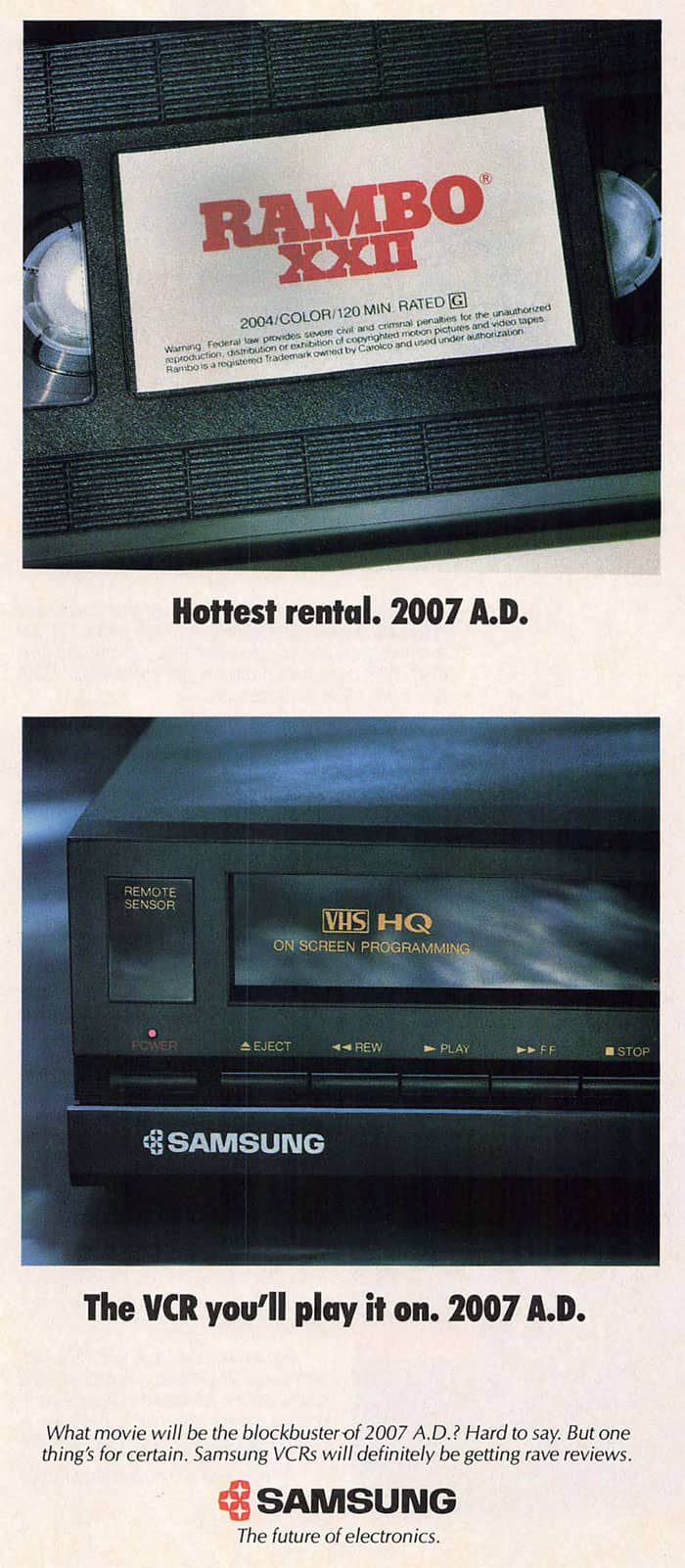
The last major studio film to be released on VHS in the United States and Canada was released in 2006. VHS was dead by 2007.
#52 This Vintage Ad

Ayds were an appetite-suppressant candy designed to help you lose weight. The company had to change the product name in the 1980s due to the AIDS epidemic because it's a disease that causes extreme weight loss in patients.
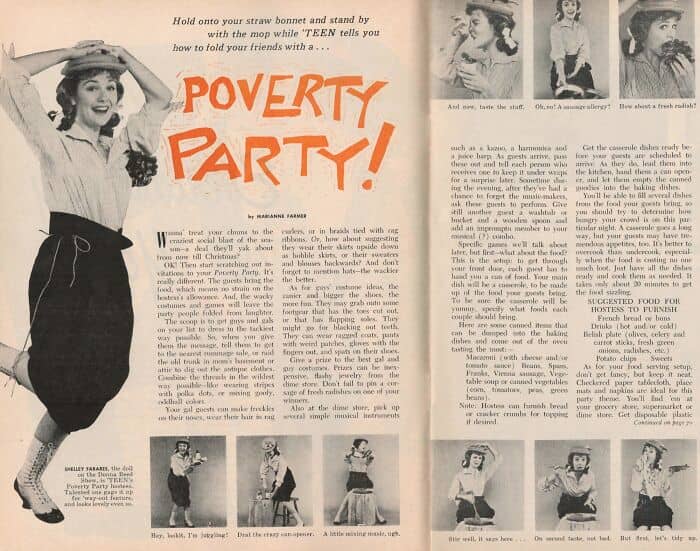
#53 Poverty Party! Teen Magazine And Shelley Fabares Show Us Just How Much Fun It Can Be To Be Poor And Hungry (1960)
#54 Great Uncle Steve, The Carrier Of The Coin Purse
#55 Now, A New Sanitary Fixture For Women’s Restrooms… The Sanistand Women’s Urinal. American-Standard, 1950s
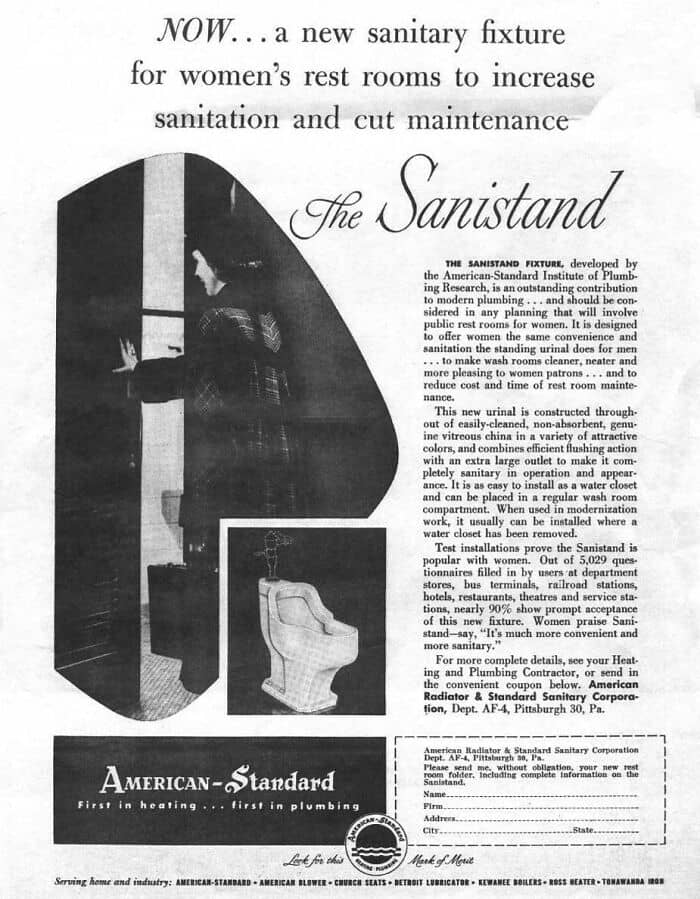
It’s the 1950s. Imagine having to pull down your underwear, garter belt, and stockings and then trying to maneuver yourself over the "vitreous china" bowl and pee without all your urine streaming down your leg into your underwear and shoes. This isn’t a toilet. It’s a torture device.
#56 This Advertisement
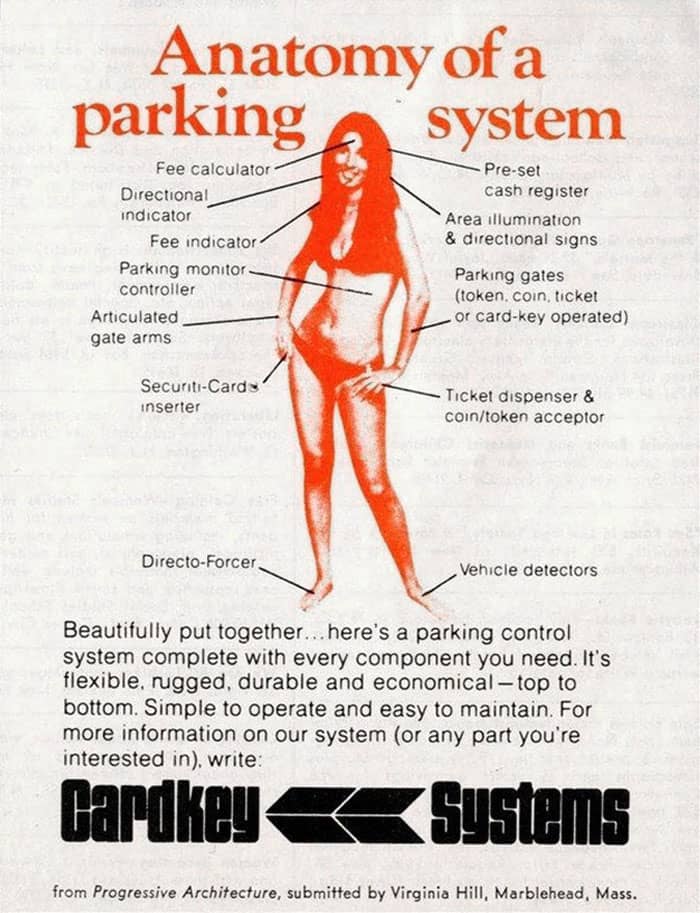
#57 Today, An Ad Like This Wouldn’t Be Acceptable

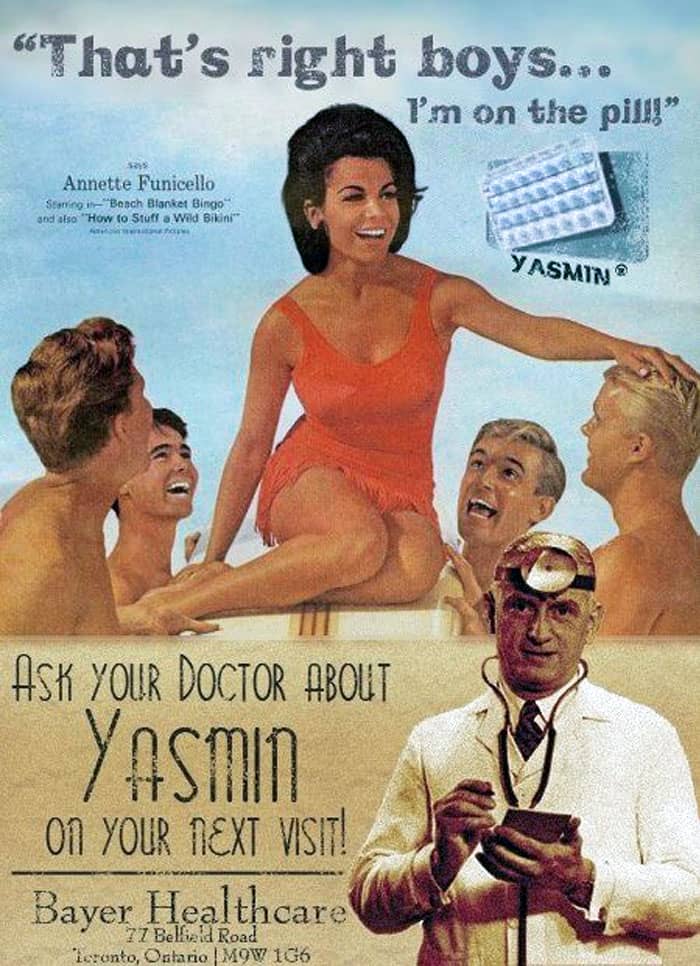
#58 Yasmin Birth Control Ad, 1960
#59 DDT Was One Of The Great Tragedies And Later Victories Of Indiscriminate Chemical Usage In The Environment
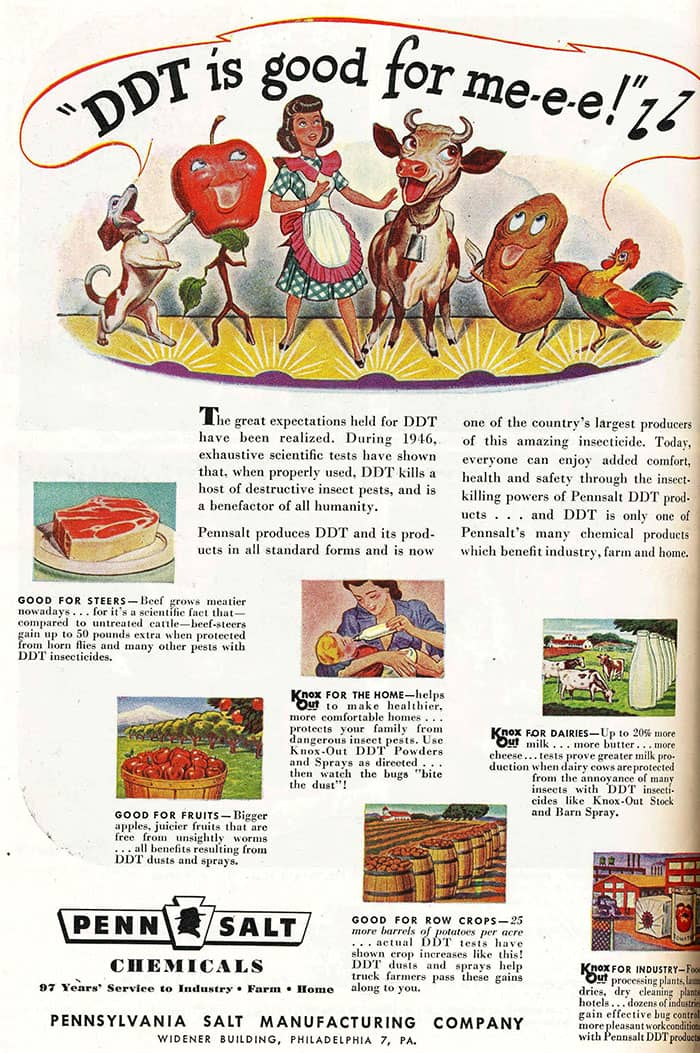
It’s not safe at all (a carcinogen that can also induce seizures and vomiting) and was particularly damaging to animals at the tops of food chains. Birds were the whistleblowers of its negative effects since it was almost immediately apparent in the rapid decline of their population. In avian species, DDT caused soft eggshells that the parent birds crushed when they tried to sit on them for incubation.
Many bird species became endangered or on critical lists, especially eagles and hawks because at that level they were consuming animals that had consumed animals that had consumed insects that ate DDT, so their bodies had higher concentrations of it in their system.
The victory came when Rachel Carson wrote the groundbreaking book, Silent Spring, drawing attention to the loss of birds and other effects of DDT, and the public outcry caused the government to ban the chemical from use in the US. It was an incredible example of humans responding to and reversing a man-made environmental disaster.
#60 In 1970, The 7-Eleven Chain Of Convenience Stores Advised Busy Moms To Shop There Because They Have Parking By The Big Windows Up Front And You Can Leave Your Kids In The Car While You Shop
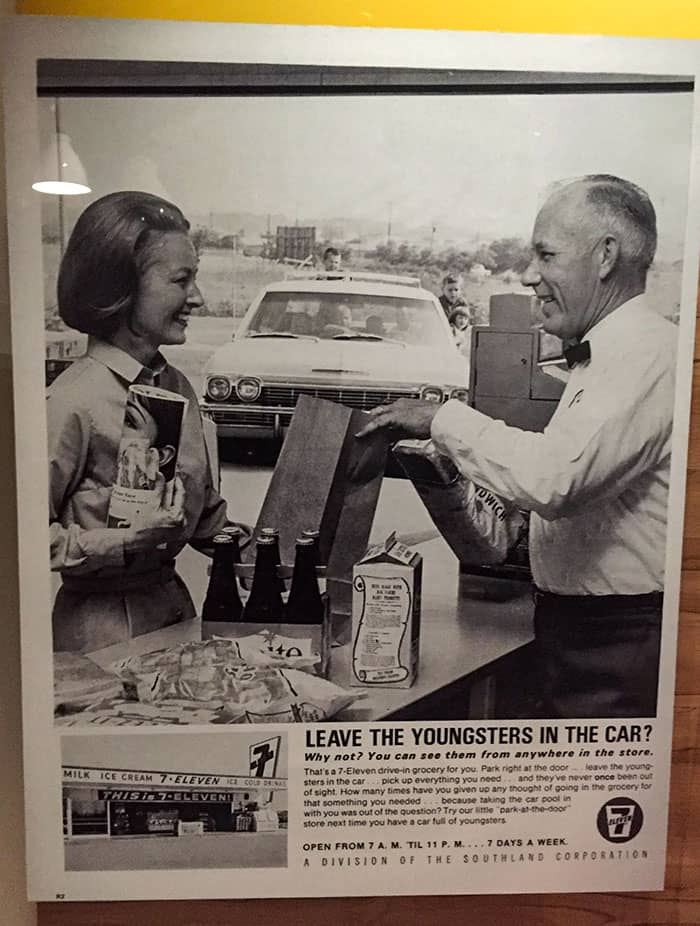
These days, no company would explicitly tell parents to go ahead and leave their kids in the car while they shop. That's just setting yourself up for a lawsuit when a kid bakes in a hot car.
#61 An Ad To Buy A Squirrel Monkey For Less Than $20 In A Comic Book From The 1960s

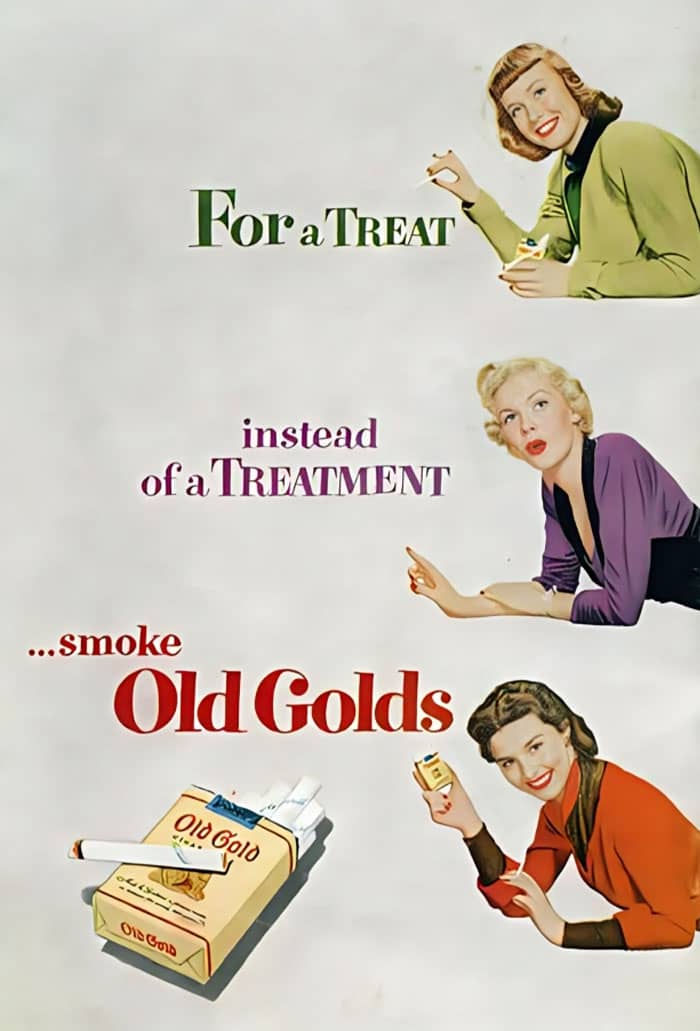
#62 1951 Ad For Old Gold Cigarettes. There’s Some Horrific Irony With This One
#63 Sexist Tire Ad From 1977
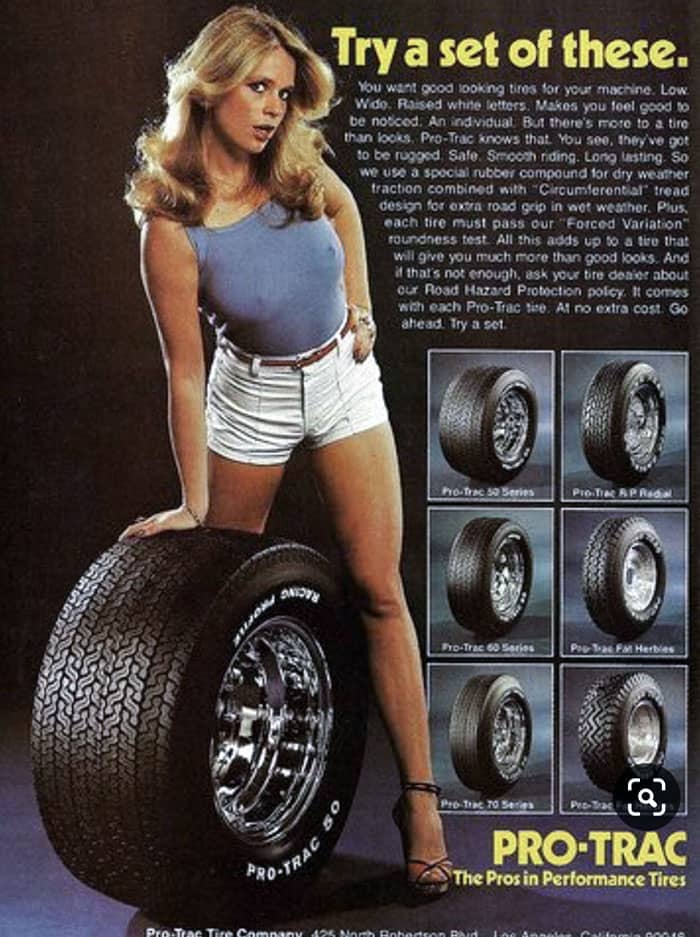
#64 This Didn’t Age Well
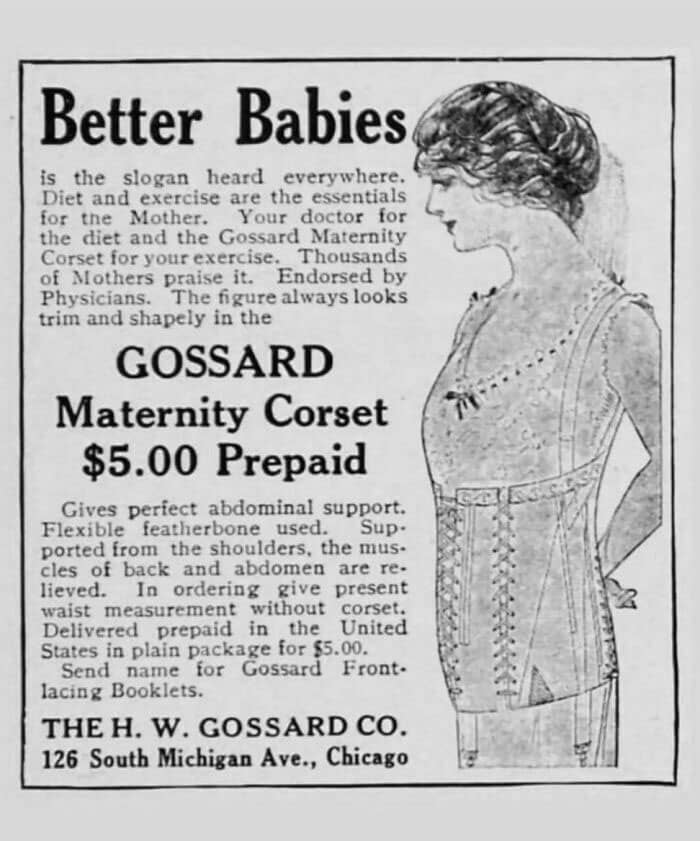
#65 Apple Was Advertising That Companies Should Make Their Products Affordable When They Nowadays Make Their Products Very Expensive To The Consumer

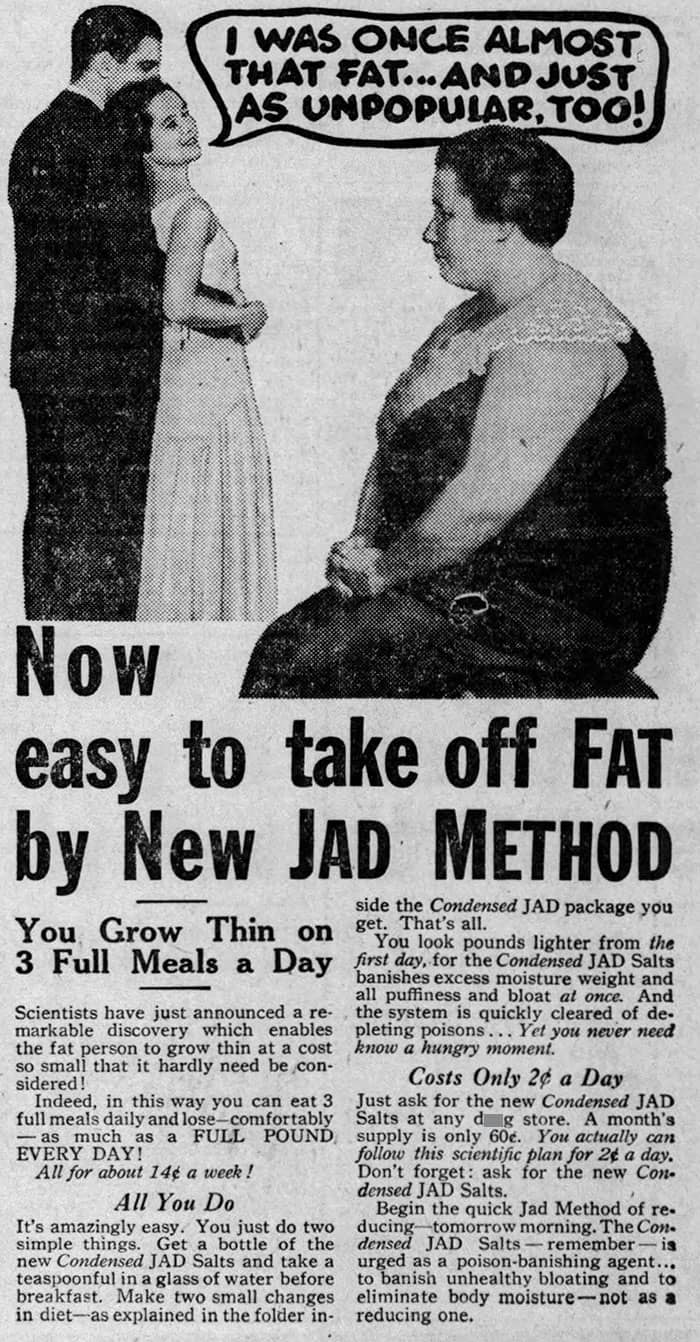
#66 Back In The 1930s, They Believed That JAD Salts Could Cure Obesity While Still Maintaining A Normal Diet
#67 In The 1940s, Lysol Was Advertised As A Feminine Hygiene Product And Contraceptive
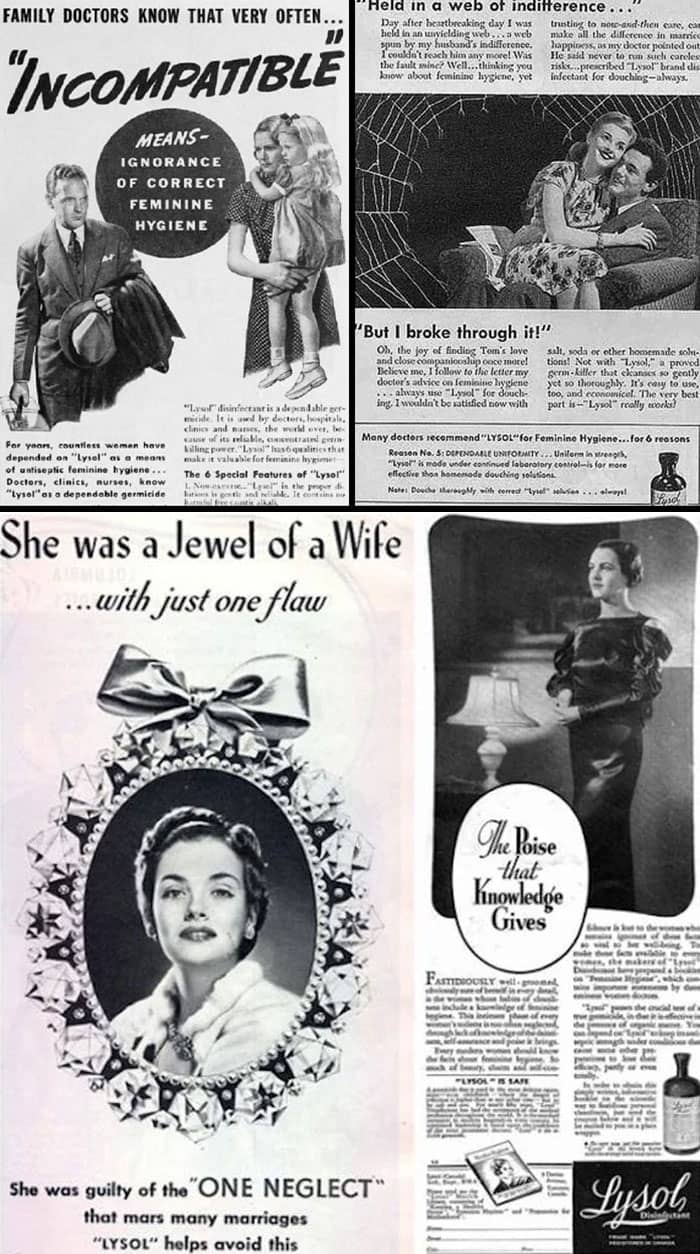
Due to female contraceptives being illegal at the time, companies offering alternatives were seen as a godsend. In the Lysol ads, the phrase "feminine hygiene" was an euphemism for "contraceptives". Lysol promised to reduce the chance of contracting unmentionable diseases while also maintaining what was referred to as "feminine daintiness" as a way to "protect married happiness".
By 1911, 193 reported Lysol poisonings and 5 deaths due to "uterine irrigation," but the use of Lysol as a feminine hygiene product continued in the 1950s.
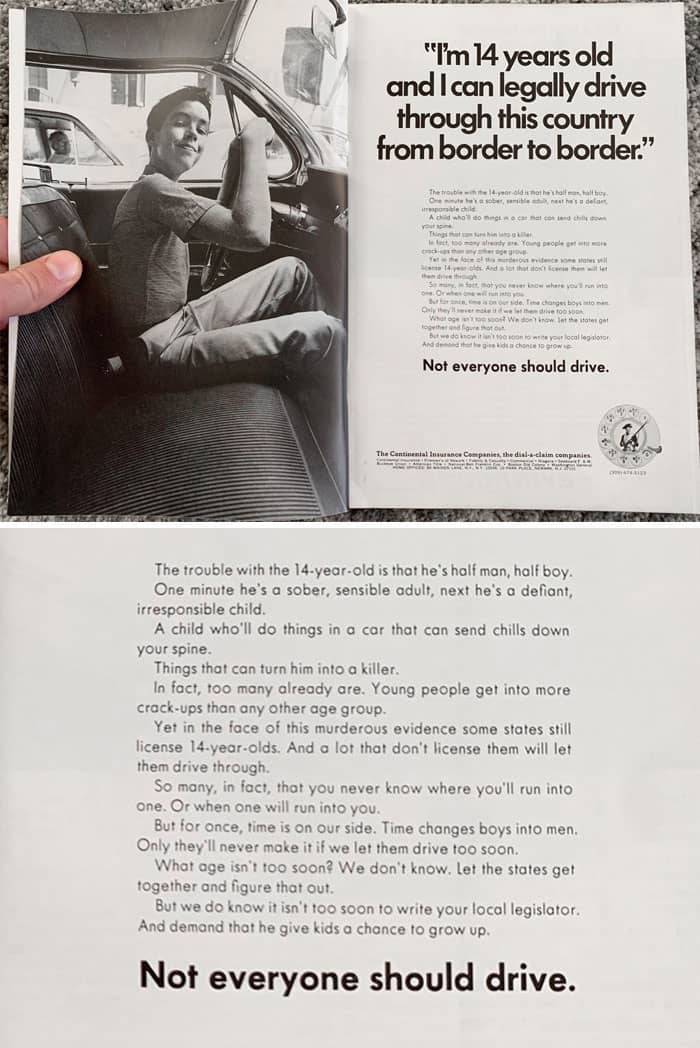
#68 This Ad From 1969 Asks For The Driving Age To Be Increased From 14 Years Old
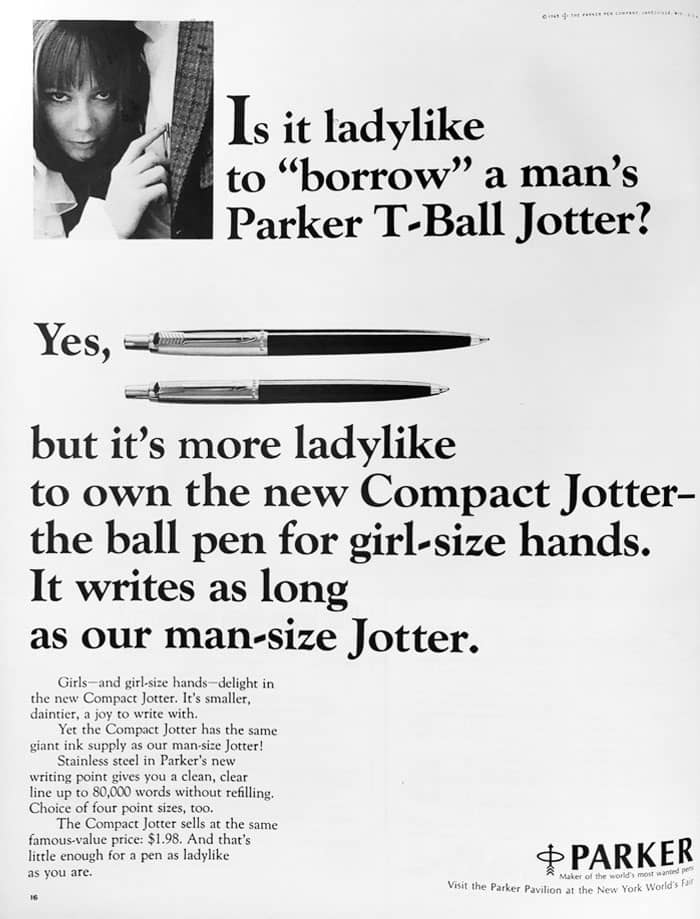
#69 Is It Ladylike? Life Magazine, 1965
#70 Ford Ad 1970. From The Congressional Club Cookbook

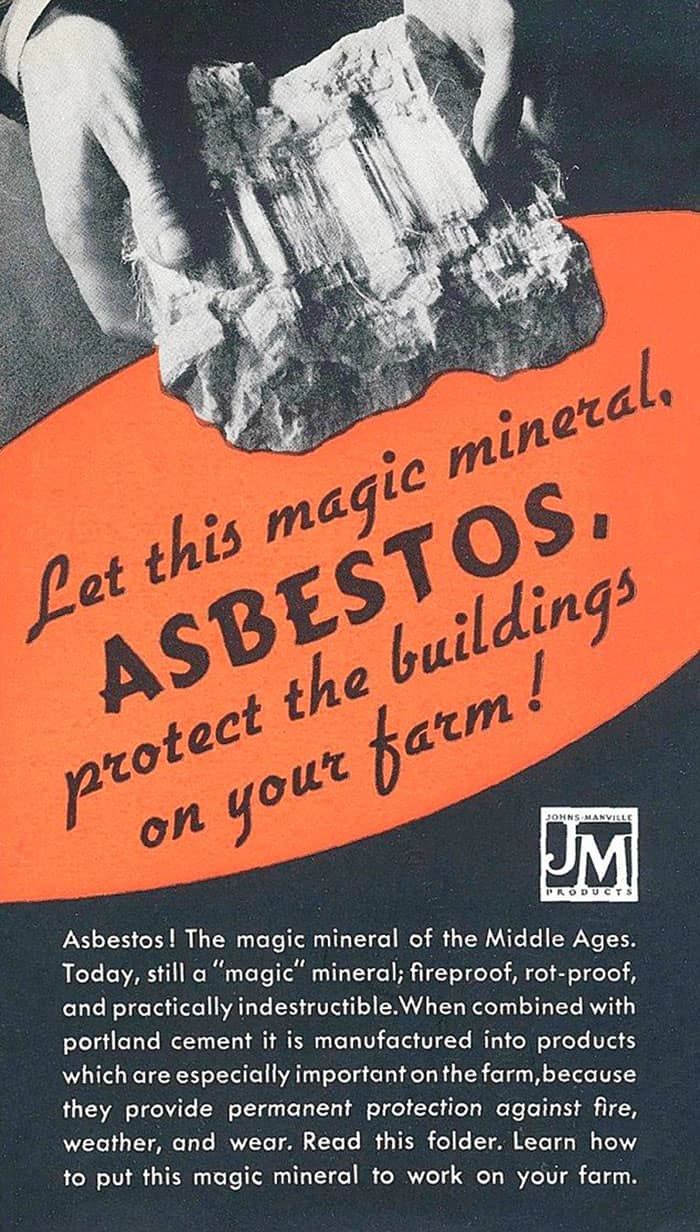
#71 An Old Advertisement Hyping Up Asbestos. Asbestos Is Now Known To Be Very Bad For Humans’ Health And Has Fallen Out Of Favor
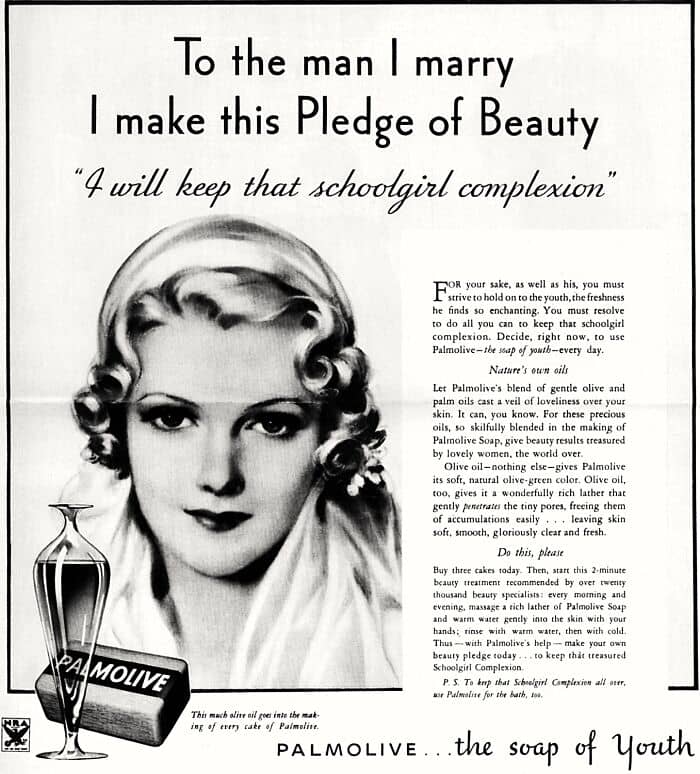
#72 “To The Man I Marry, I Make This Pledge Of Beauty: I Will Keep That Schoolgirl Complexion”. An American Magazine Ad For Johnson Soap. New York Times. USA, 1933
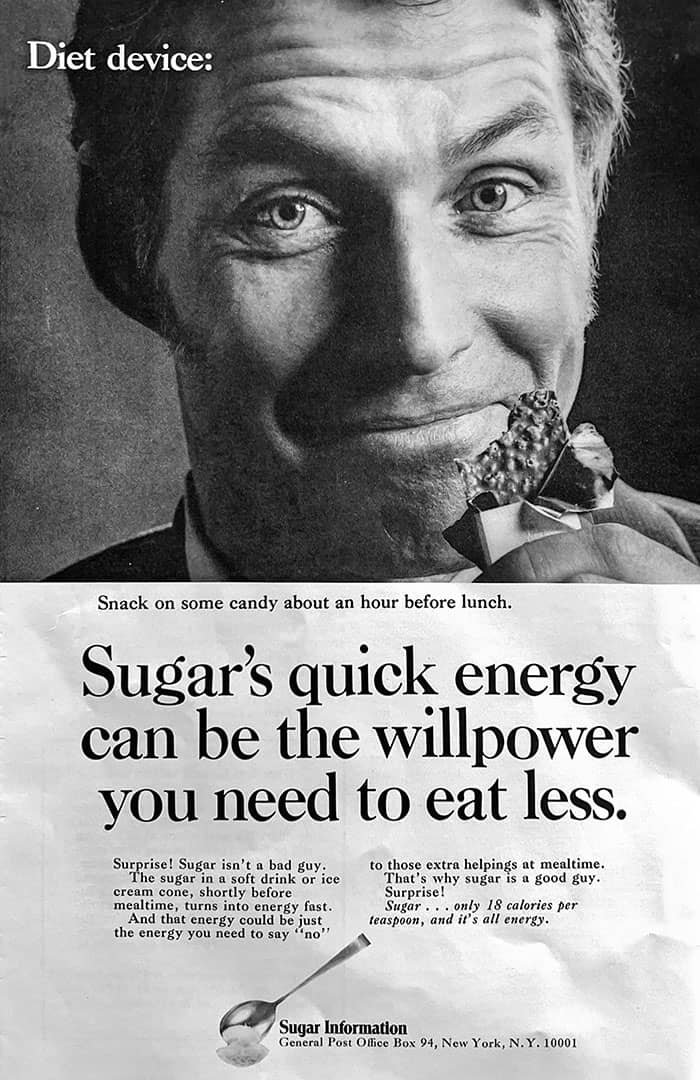
#73 Sugar As Diet Aid In 1971
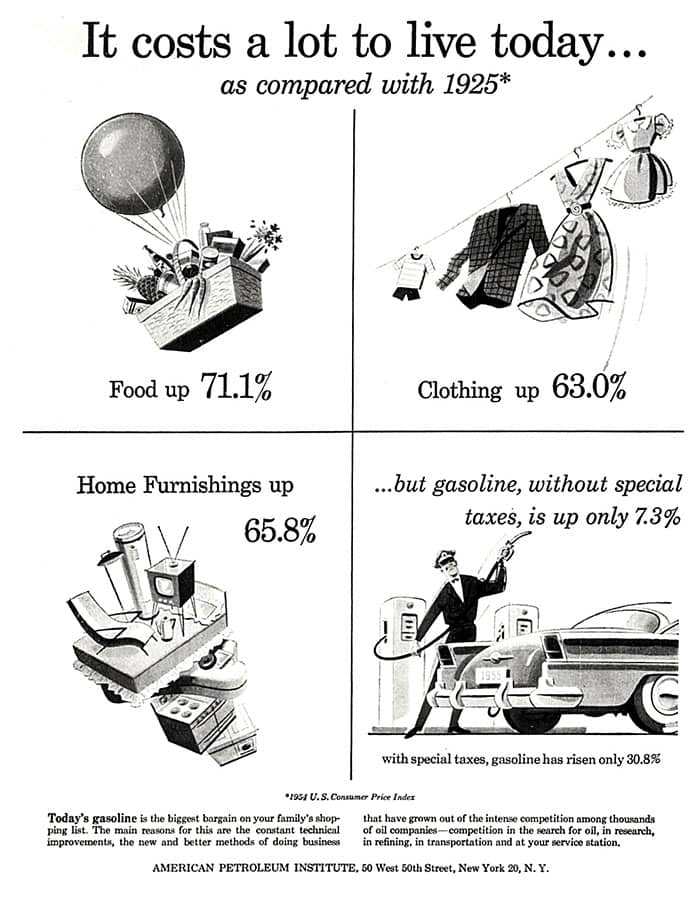
#74 An American Magazine Ad By American Petroleum Institute, 1955
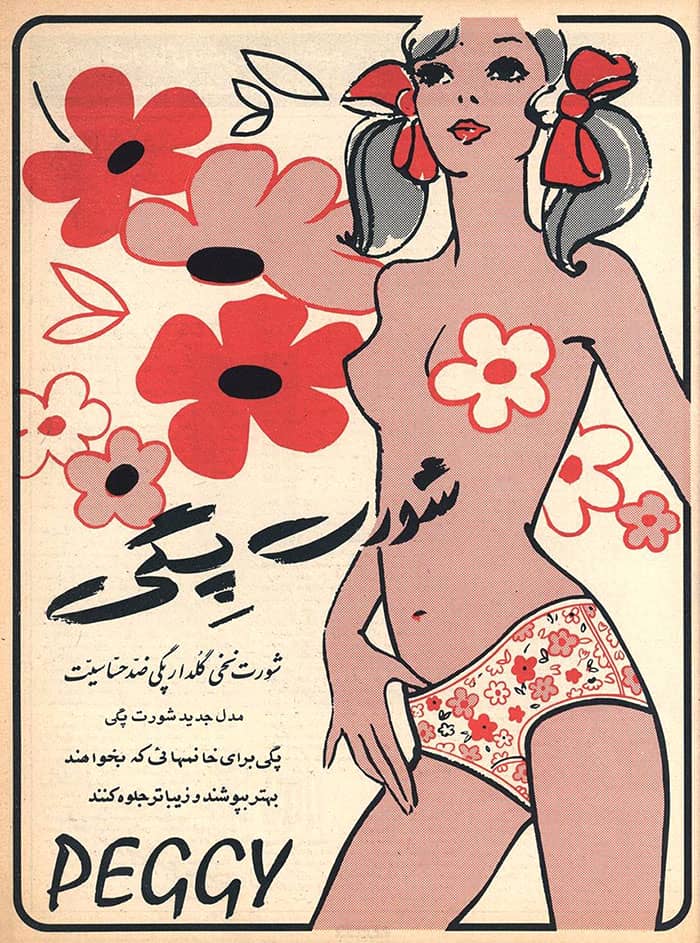
#75 Underwear Advertisement In Iran, 1971
#76 Camel Cigarette Ad From 1933
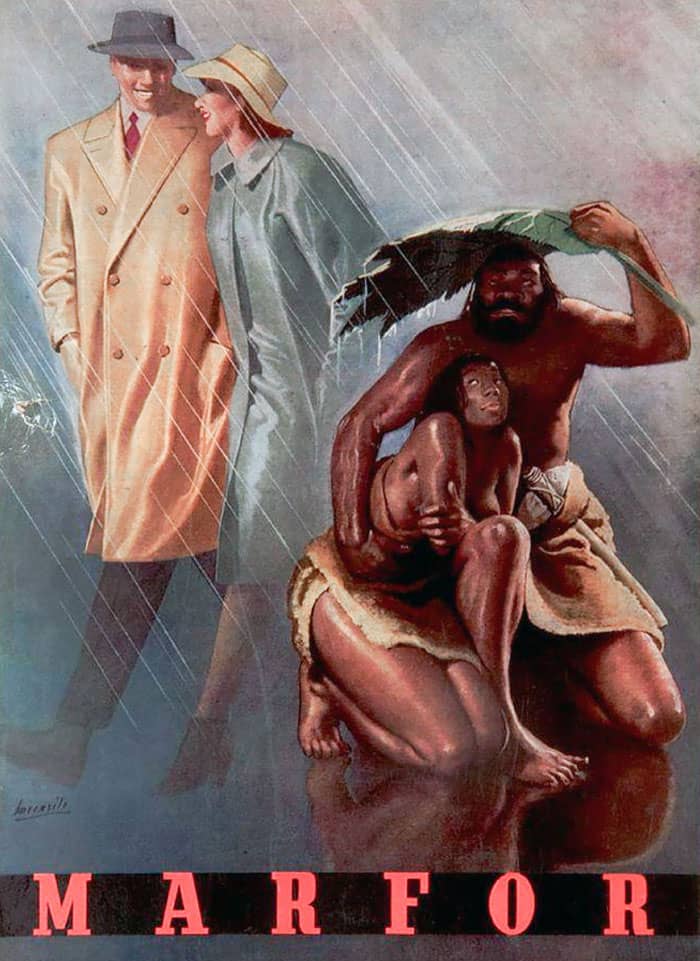
#77 Marfor Coats, 1940
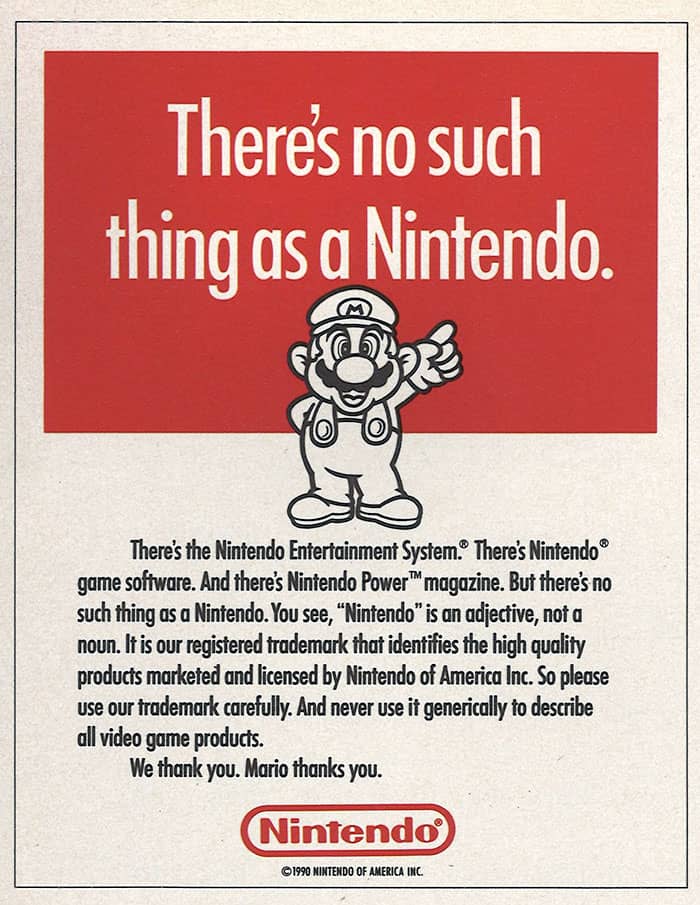
#78 “There’s No Such Thing As A Nintendo”. Well Look At Them Now
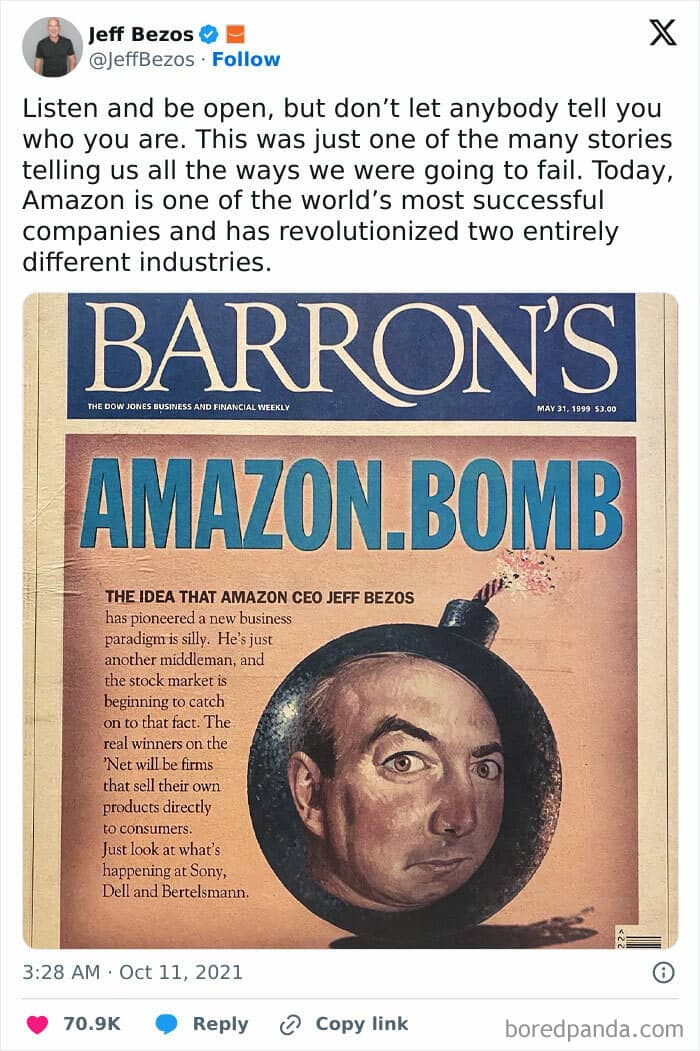
#79 Wisdom Is In The Balance Of Listening To Others But Knowing Where To Stand Firm
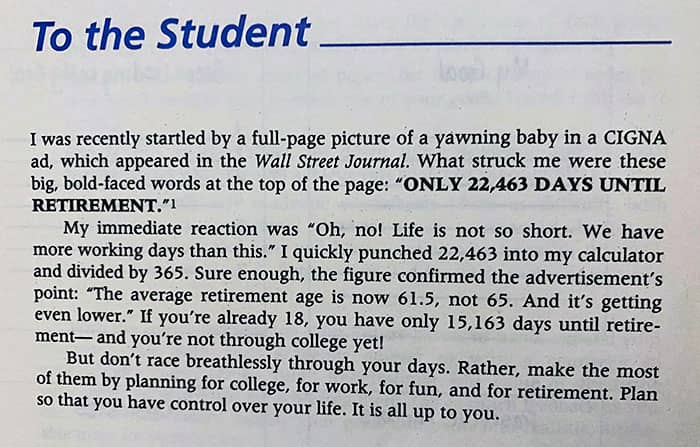
#80 “The Average Retirement Age Is Now 61.5… And It’s Getting Even Lower.” The Average Age Of Retirement Continues To Climb In The US, With Many Deciding To Push Back Retirement
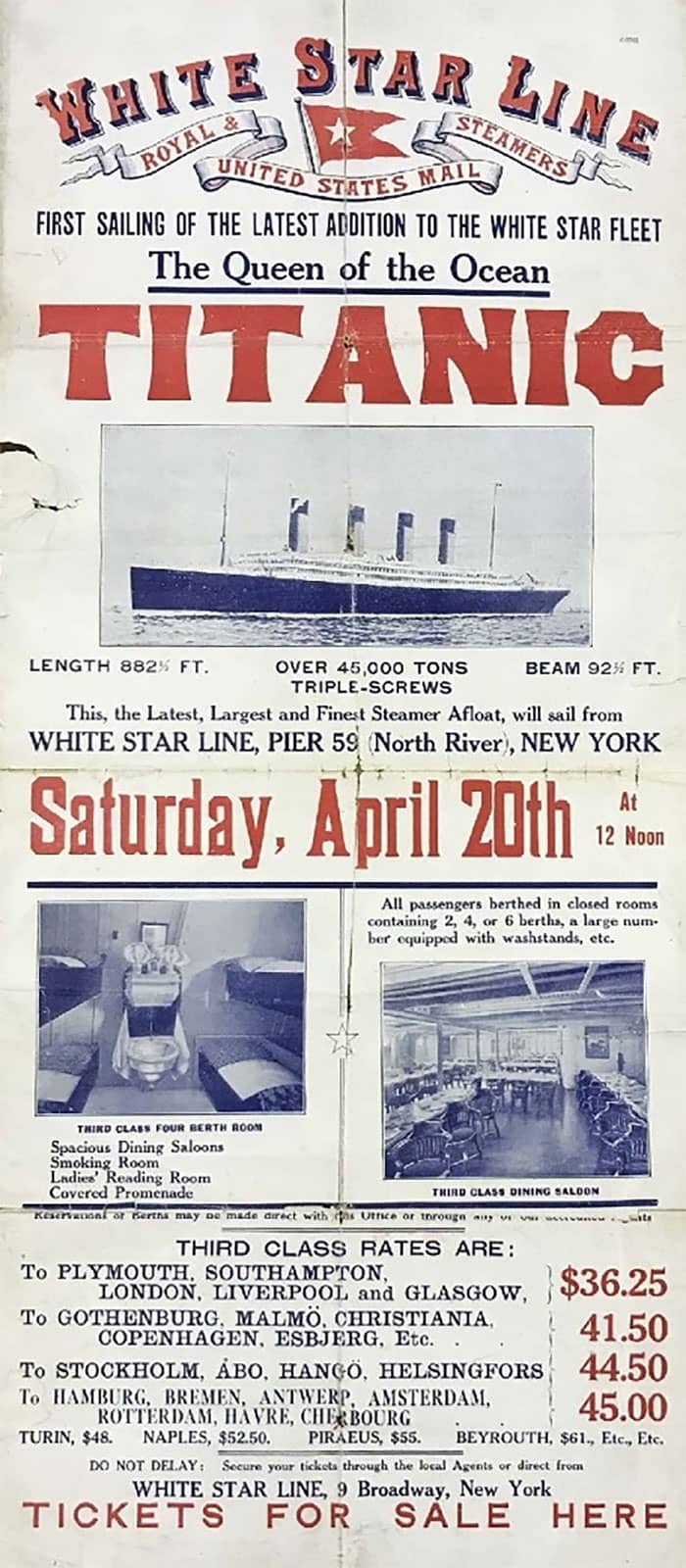
#81 A Poster Advertising The Return Voyage Of The Titanic
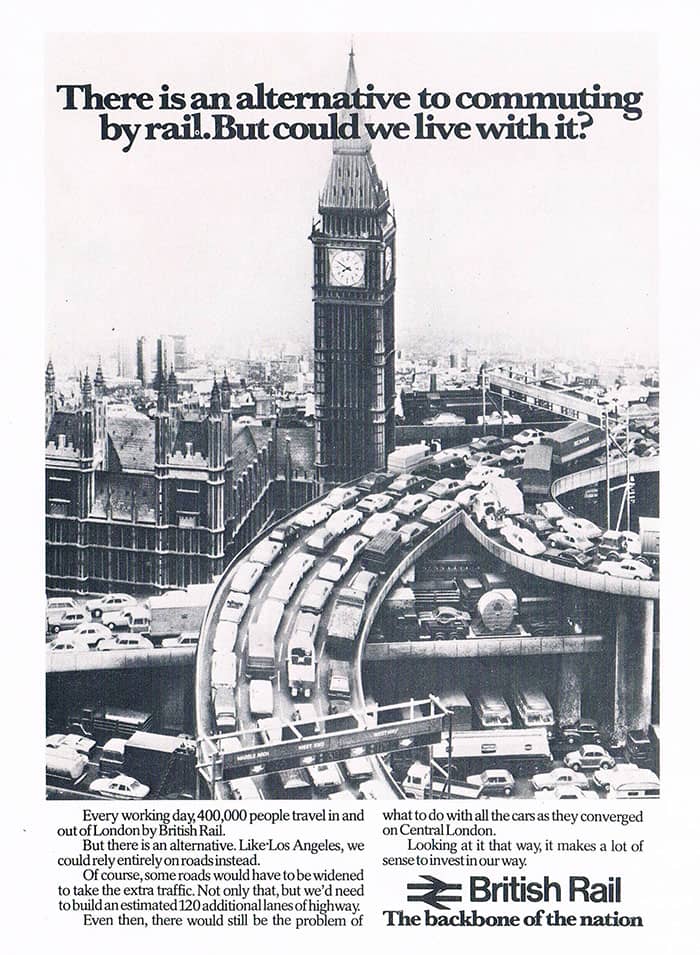
#82 British Railways, 1979. That Looks Like Every American City
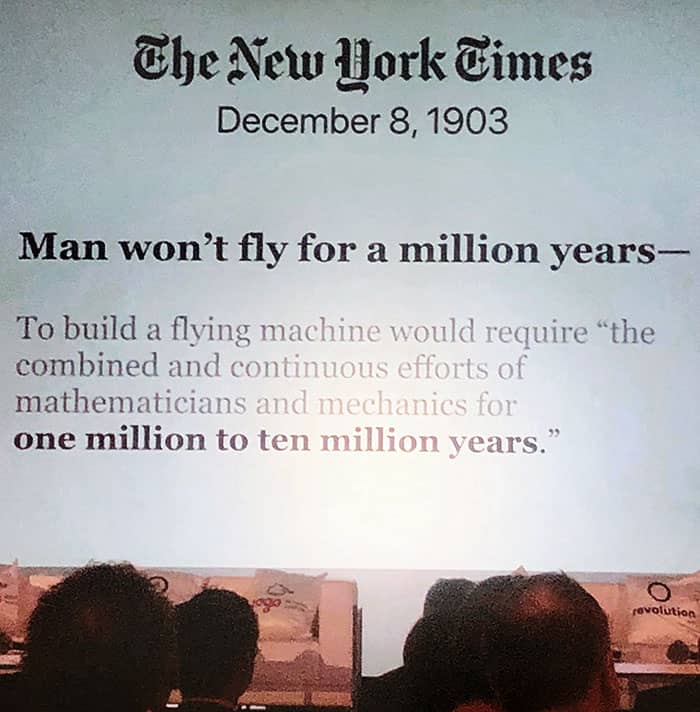
#83 The New York Times Ad In 1903
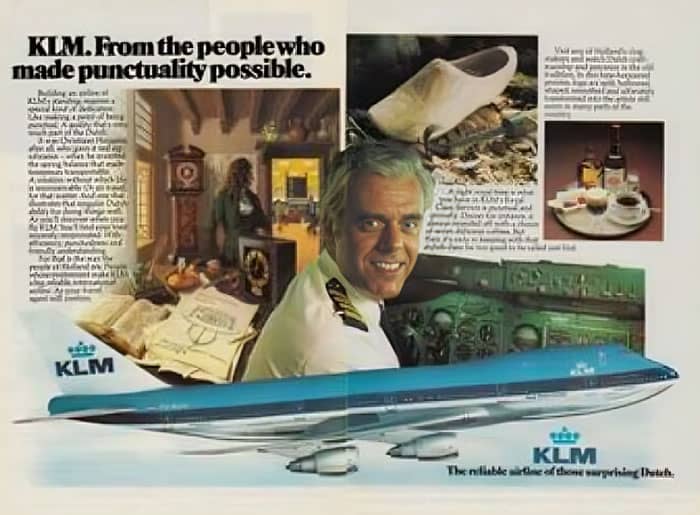
#84 1977 KLM Advertisement Featuring A Pilot Who Would Be Involved That Year, In The Worst Aviation Accident In History At Tenerife Airport
#85 Found This In Wired Magazine From April 1999
#86 This Is An Actual Ad From A 1970 National Geographic. I Found It In My Grandmother’s Basement
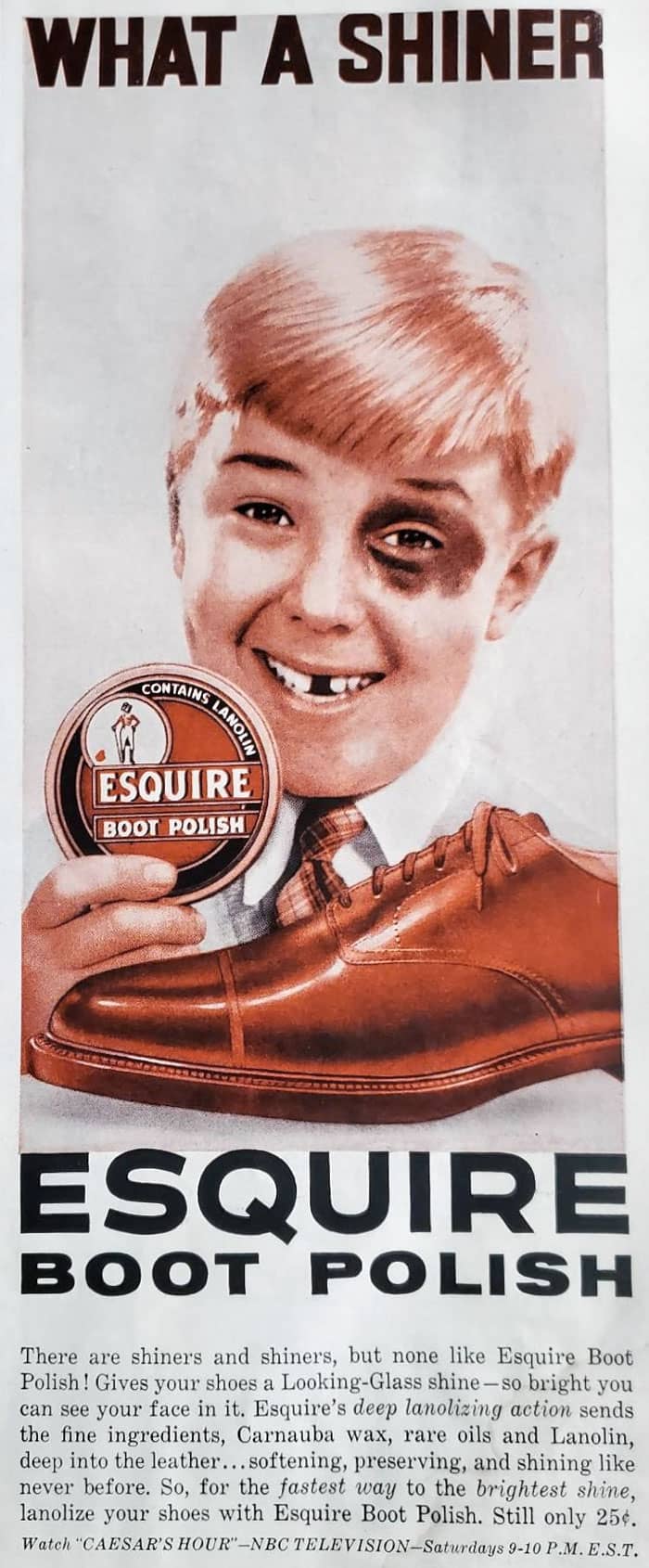
#87 Esquire Boot Polish “What A Shiner” Ad From Life Magazine (1956)
#88 Vintage Plastic Packaging Ad For DuPont
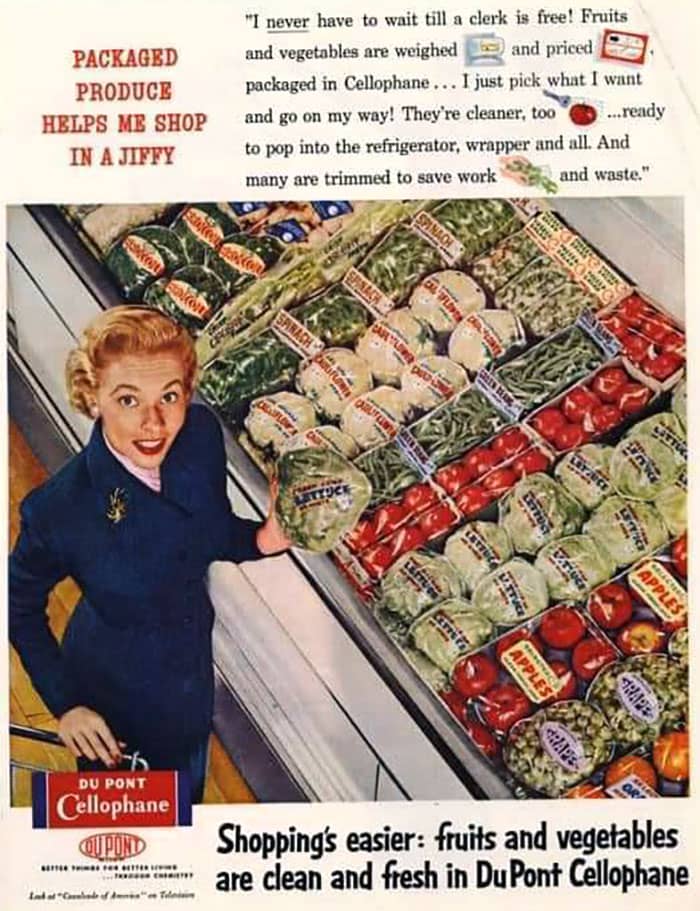
This vintage ad from what appears to be the 1940s or 1950s shows the benefits of using pre-packaging and cellophane for produce, claiming to reduce waste. However, we are reaping the consequences of careless plastic usage. It’s filling our oceans and destroying many kinds of ecosystems, and it has not been beneficial over time. Plus, it’s filled with carcinogens. Also, DuPont has been under controversy in recent years due to toxic waste pollution.
#89 If You Post An Ad Like This Today, You Will Probably Get Shamed On Social Media
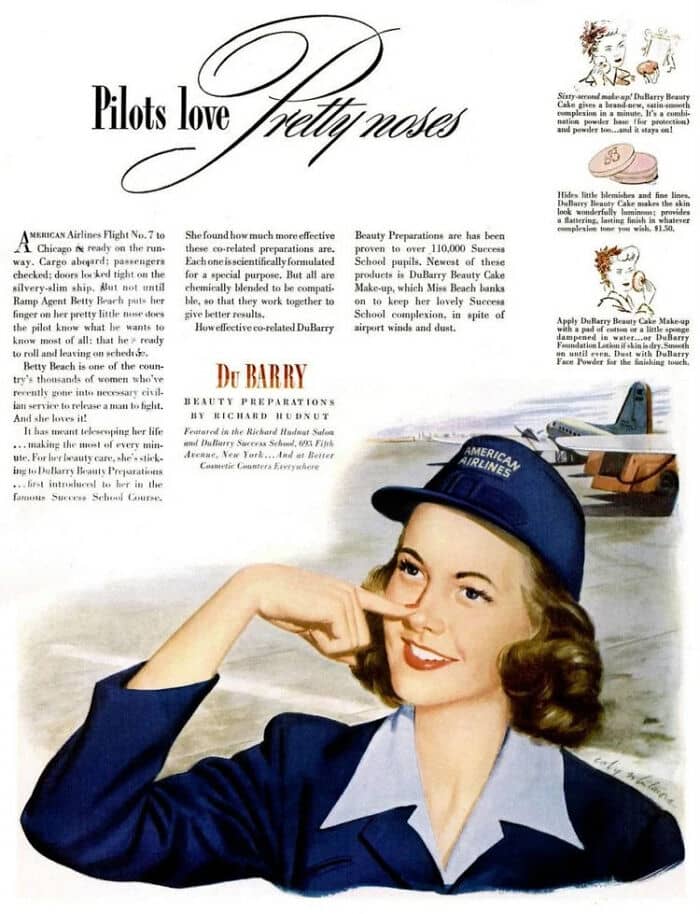
#90 “Pilots Love Pretty Noses”. Dubarry Makeup Ad, 1944
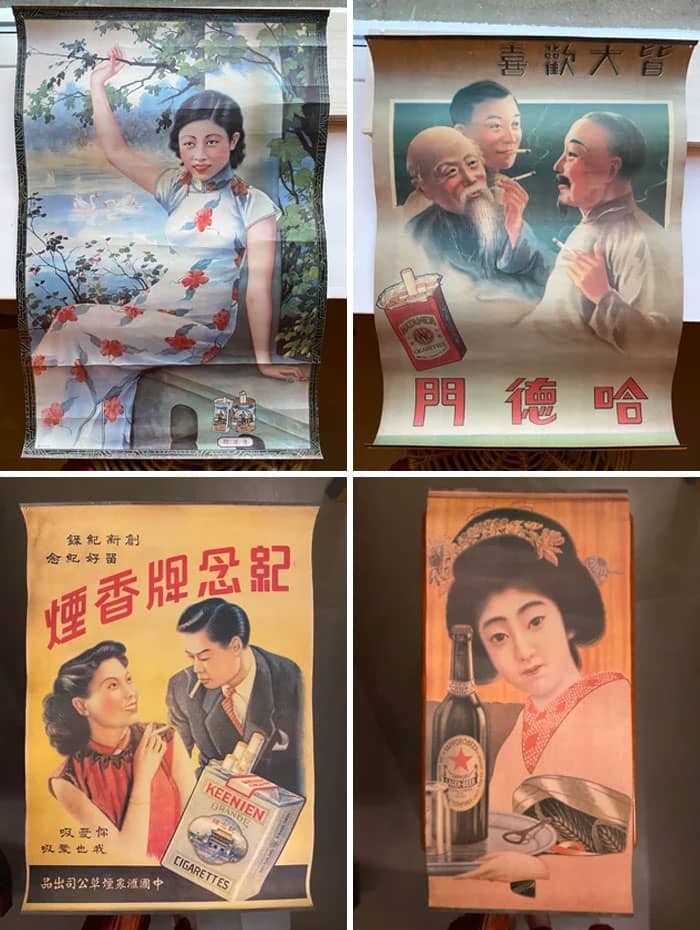
#91 Beautiful Old Cigarette And Beer Advertising Posters
#92 National Lead Company Ad For Dutch Boy Paint Via The Saturday Evening Post Of January 6, 1923
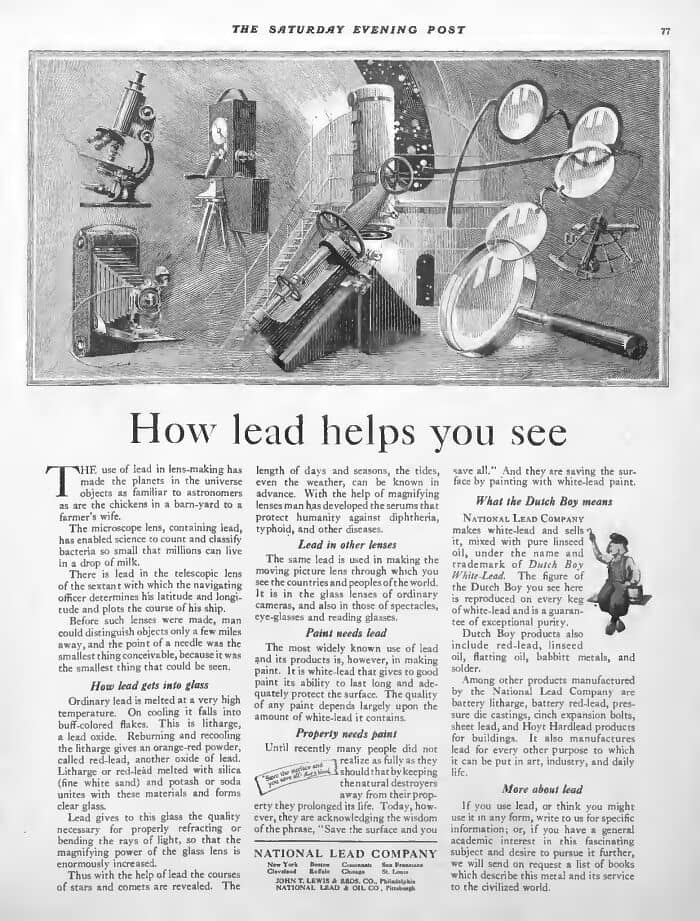
Lead is added to paint to accelerate drying, increase durability, maintain a fresh appearance, and resist moisture that causes corrosion. It is one of the main health and environmental hazards associated with paint. Lead paint has been generally phased out of use due to the toxic nature of lead.
#93 The Console War Is Here. A Gaming Magazine From August 1998

#94 This 1949 Ad In A Comic Book For Rubber Masks
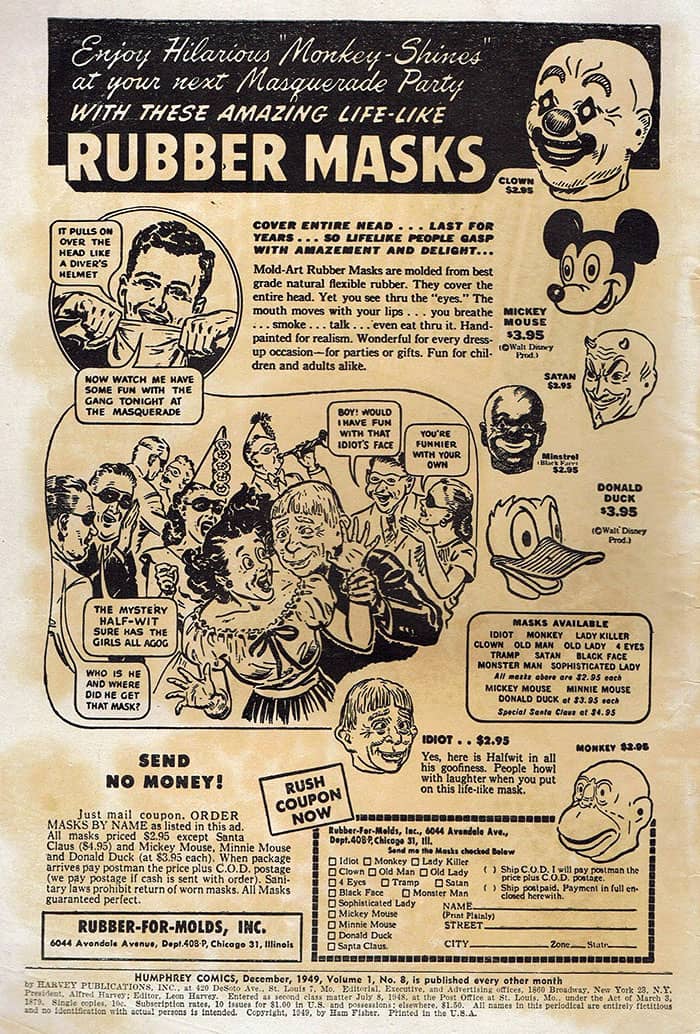
With masks for "idiot/halfwit" and "Minstrel (blackface)," these would not be appropriate today at all. Given the trouble politicians and celebrities have had with "Blackface" pictures surfacing, as well as an increased awareness of those with disabilities, this is truly stuck in its era.
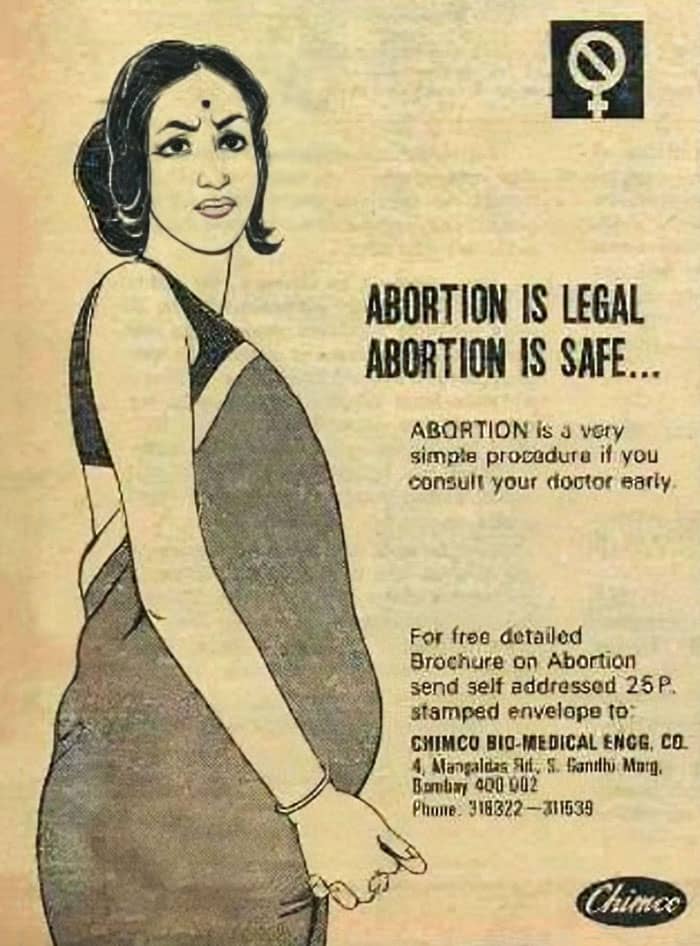
#95 1970s Indian Ad On Abortion
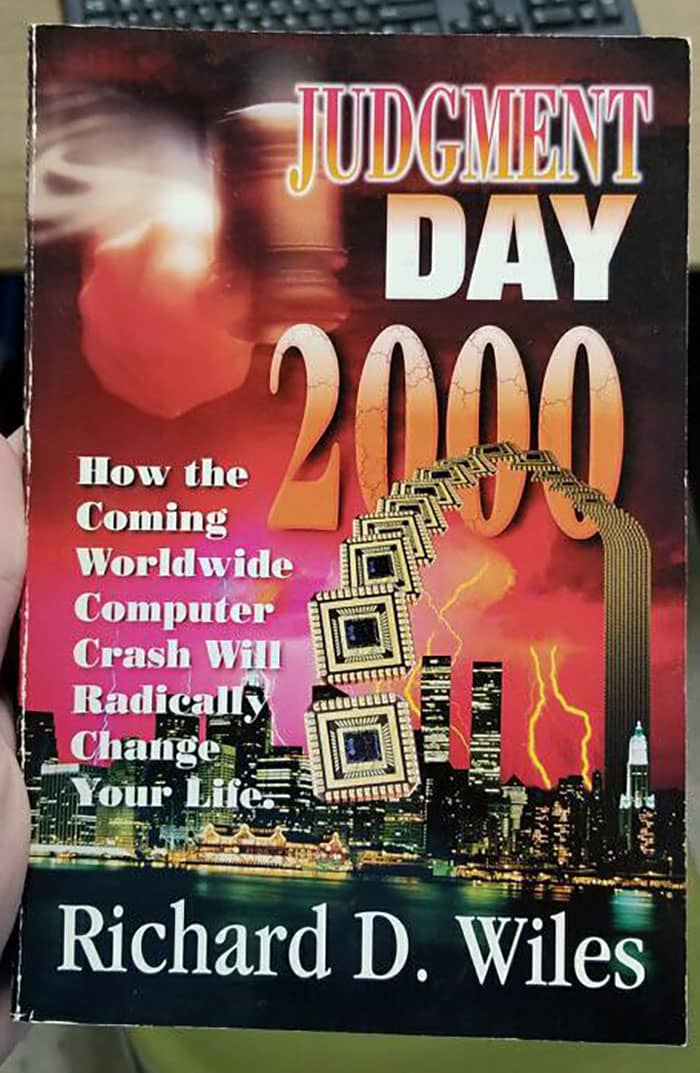
#96 This Y2K Book Aged Pretty Poorly
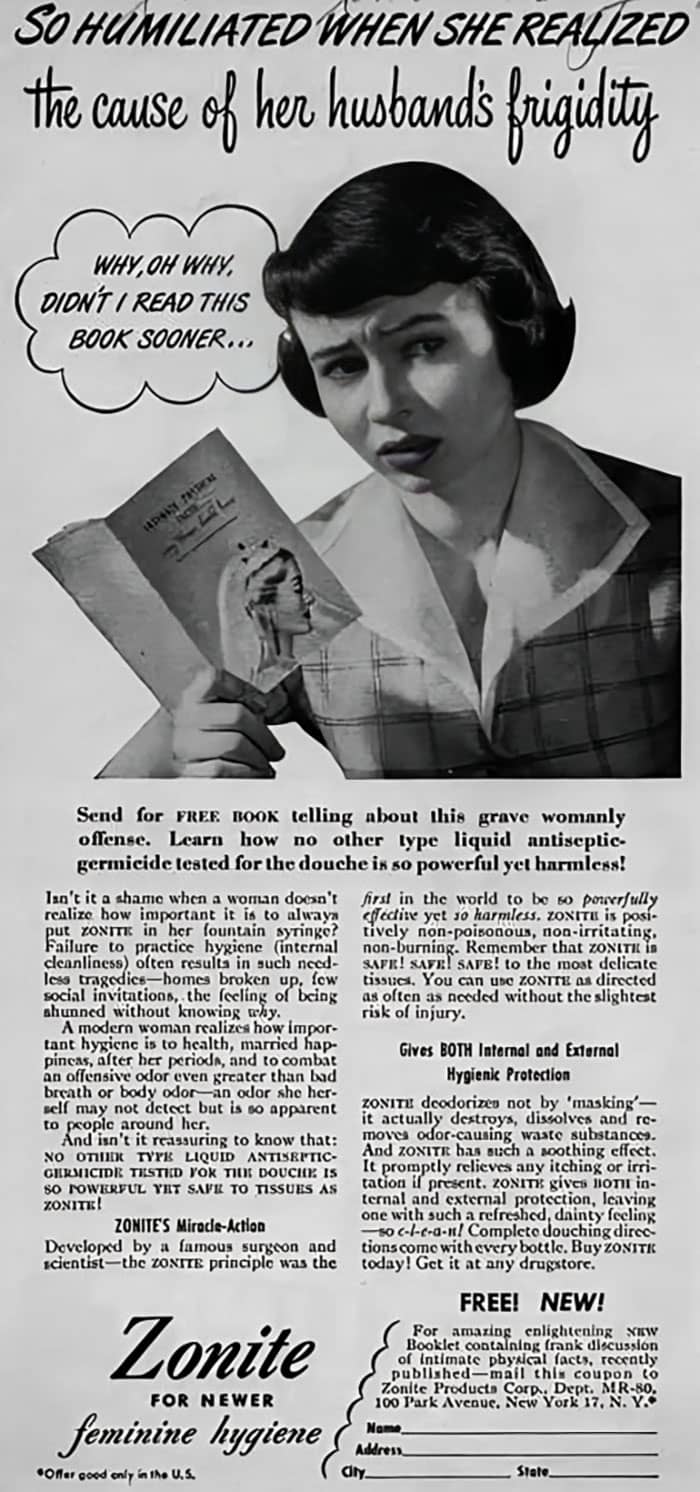
#97 Just Another Way To Humiliate And Blame Women In 1950
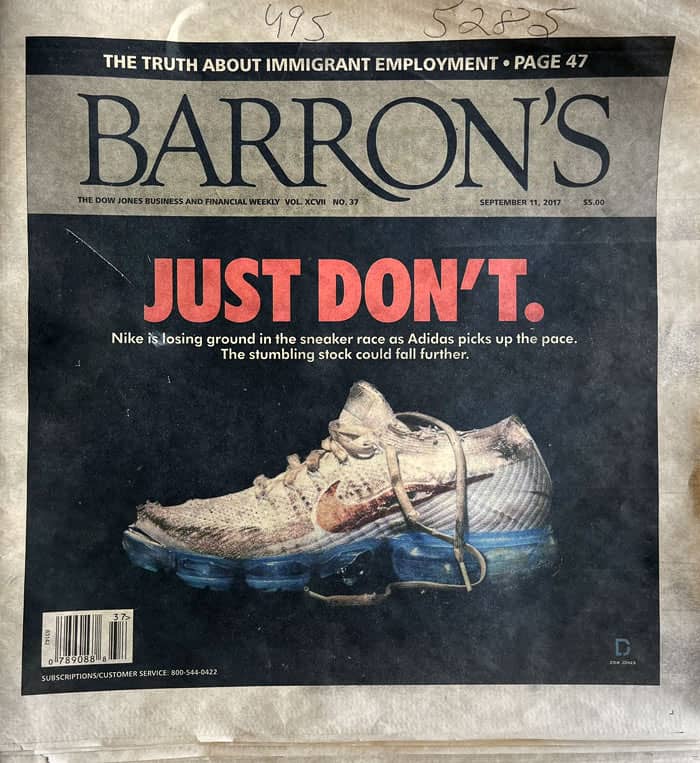
#98 I Saved This One About Nike From September 2017 And It Seems Like Barron’s Just Doesn’t Like Great Companies
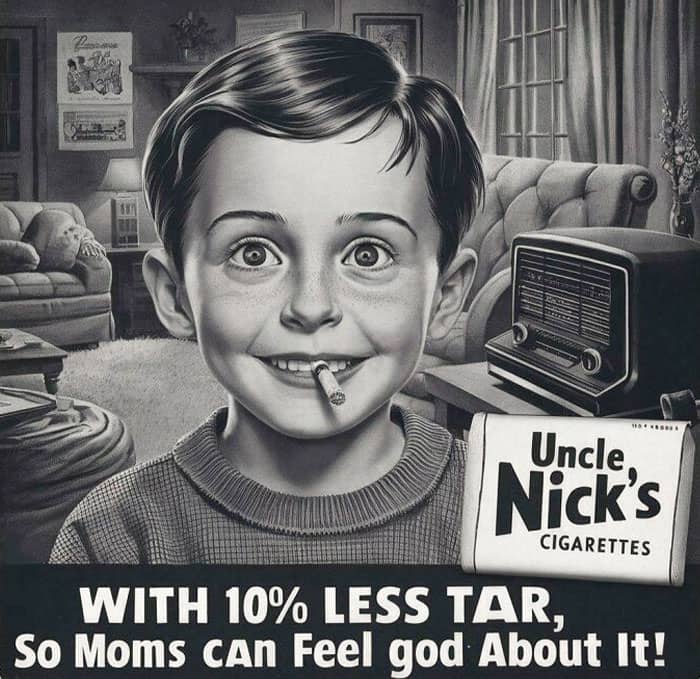
#99 1951 Ad For Uncle Nick’s Cigarettes For Kids