Weddings are meant to be celebrations of love, but sometimes, they end up testing it instead.
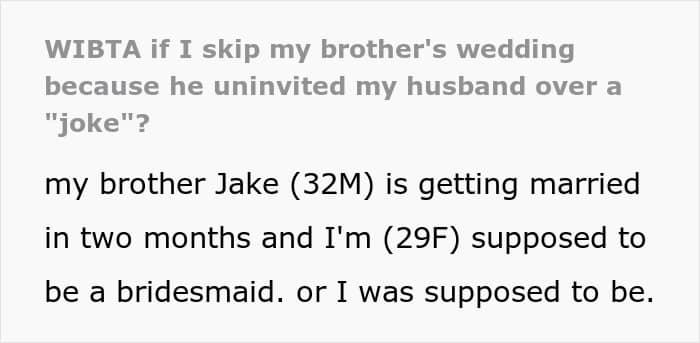
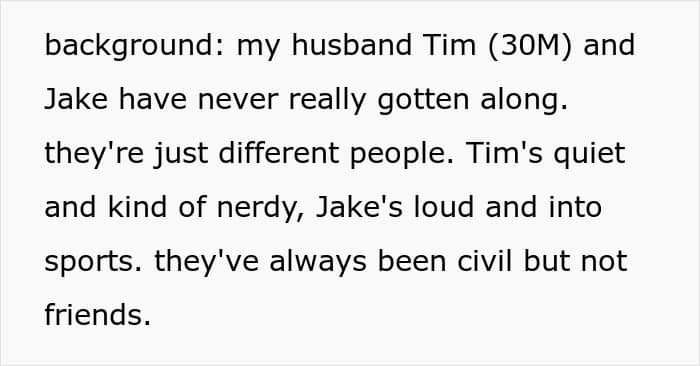
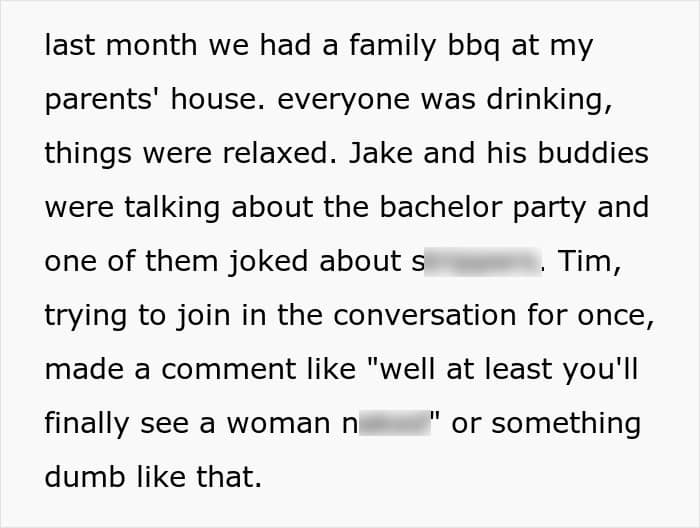
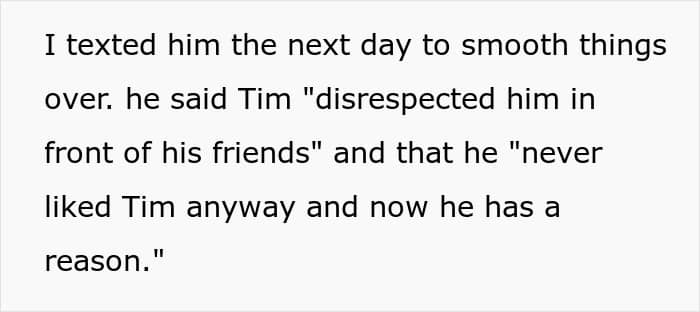
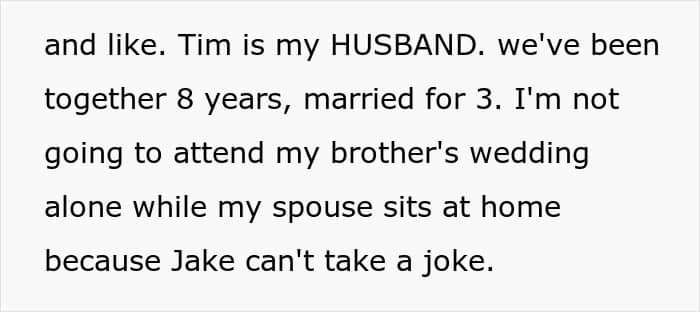
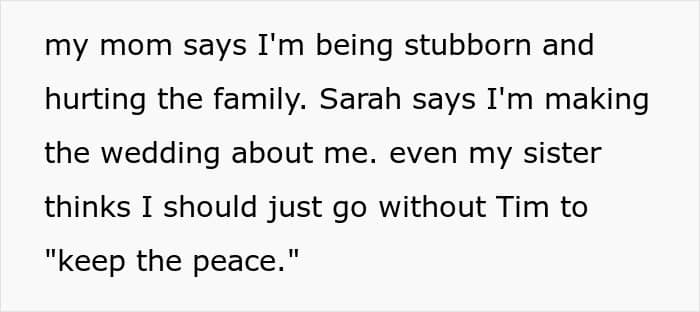
One Redditor found herself caught in the middle of family drama ahead of her brother’s big day. During a get-together, her husband made what he thought was a harmless joke in front of the groom. The comment didn’t land well, and he was promptly uninvited from the wedding.
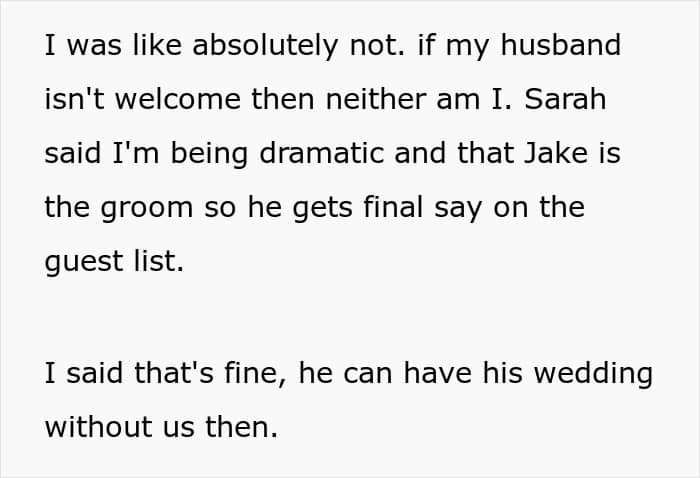
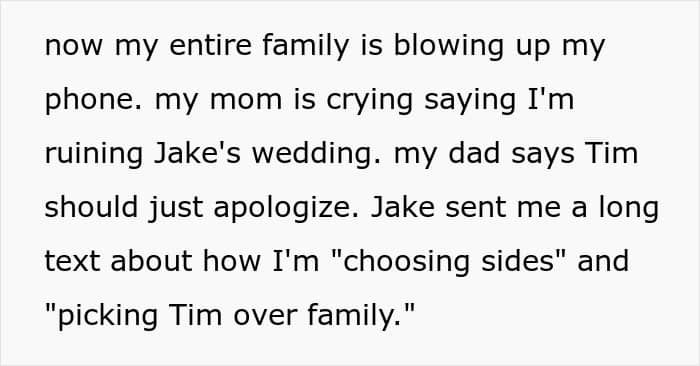
In response, the woman decided that if her husband wasn’t welcome, she wouldn’t be attending either—even if it meant not seeing her brother get married. Now, her family is calling her selfish for taking a stand. Read the full story below.
RELATED:The woman was stunned to find out her brother had banned her husband from the wedding over a joke

In solidarity, she made it clear that if he wasn’t going, she wouldn’t be going either








Setting boundaries with family isn’t easy, but it teaches mutual respect

Saying no to family can be a very difficult thing to do. Not to mention, saying no to attending your own brother’s wedding.
After all, we live in a culture of putting family first. They’re the people we’re expected to say yes to, to show up for, and to help in times of need. So when we don’t agree with them, it can land us in hot water, and often leave us feeling guilty or ashamed.
But as nerve-wracking as boundaries can feel, they’re essential for our mental well-being and a key part of standing up for ourselves. In the long run, they teach others how to treat us and remind us that our needs matter, too.
They’re also a great exercise in communication. Because when we don’t address the things that bother us—or when we keep doing what we don’t want to do—we risk letting our relationships deteriorate.
For example, if a friend keeps canceling plans and we never say anything, we eventually stop inviting them. Or if our in-laws keep showing up unannounced, resentment slowly builds until spending time with them feels like a chore.
Still, knowing boundaries are good is one thing. Actually setting them, especially with family, is another. Psychologist Dr. Abby Medcalf shared her advice on how to do it with confidence and compassion.
1. Communicate firmly but kindly
The key is to talk about your boundaries before tensions rise. Pick a calm moment and be clear, yet gentle. For example: “I love spending time with you, but I’m not okay with advice or criticism. If that happens, I’ll end the conversation and we can try again later.” They may not like it, but setting expectations early helps everyone adjust.
2. Be confident and don’t over-explain
You don’t need to justify or apologize for your limits. A simple “no” is enough. When you start explaining, people will look for ways to argue. Remember, your goal is connection, not debate.
3. Stay calm when they push back
As Dr. Medcalf notes, most people won’t be thrilled when you start setting boundaries. Try to stay calm and grounded instead of reacting emotionally.
“You want to be like a cop giving a speeding ticket,” she explains. “They don’t come up to your car window furious that you dared to speed on their highway. No, they calmly give you the ticket and then you need to go deal with the consequences/outcomes of your actions. Be the cop. Remember, boundaries are love!”
4. Follow through
If someone crosses a line, enforce what you said you would. A boundary without follow-through is just a suggestion. Staying consistent teaches people you mean what you say.
Some family members might call you selfish, but that’s often a sign that the boundary was long overdue. It’s uncomfortable at first, but over time, it leads to more respect, healthier connections, and less resentment.
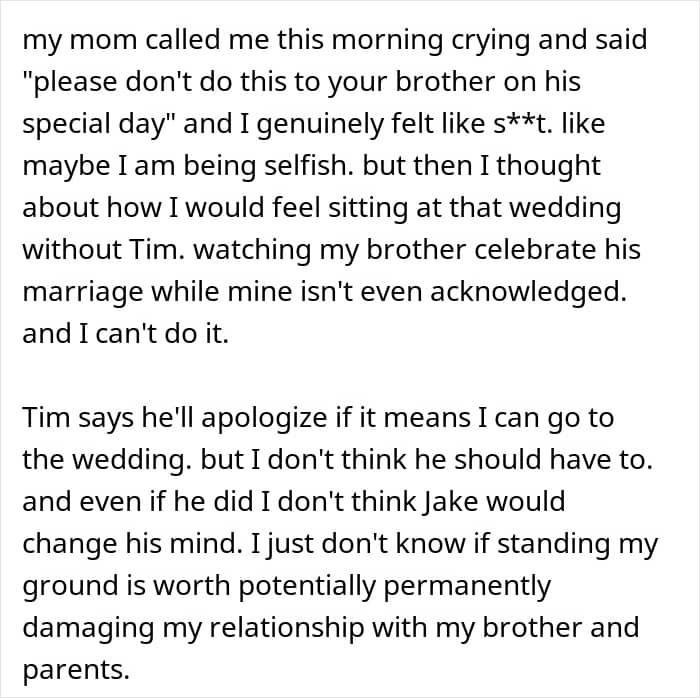
The author later shared more details in the comments

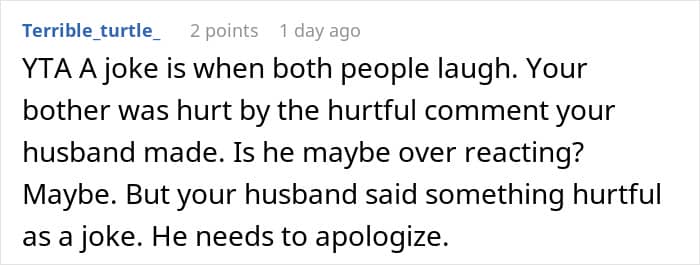
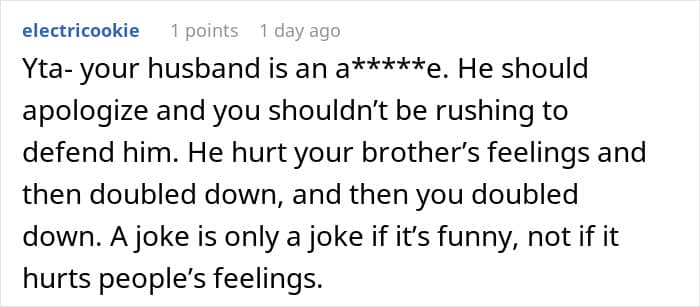
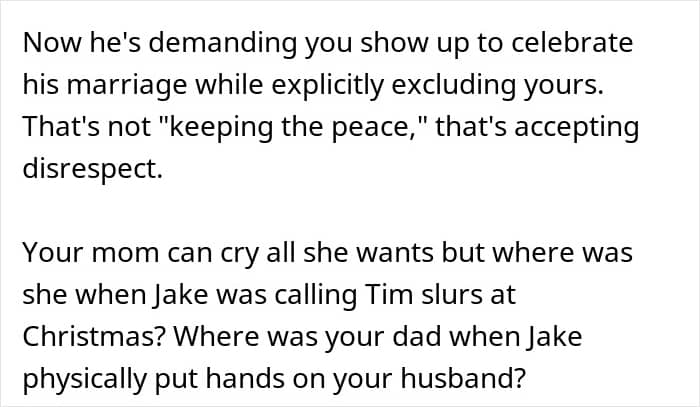
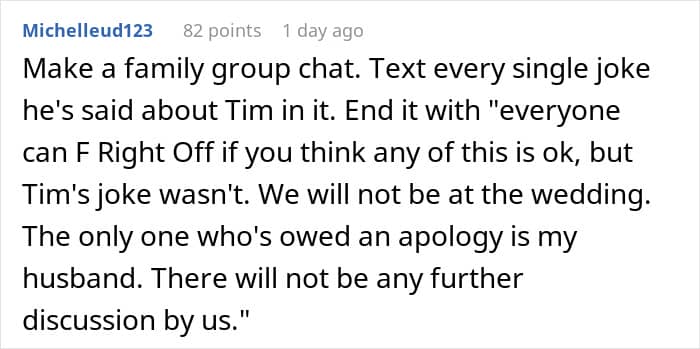
Many readers agreed she wasn’t at fault for wanting to skip the wedding



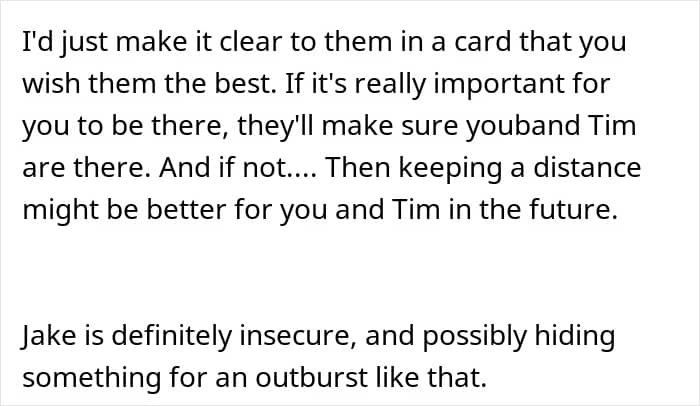
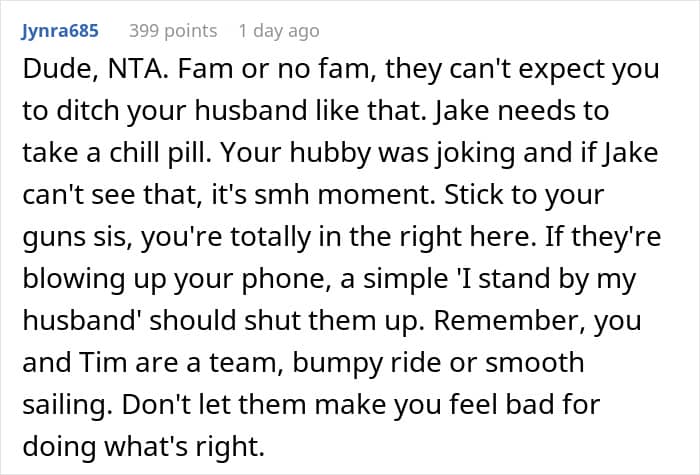
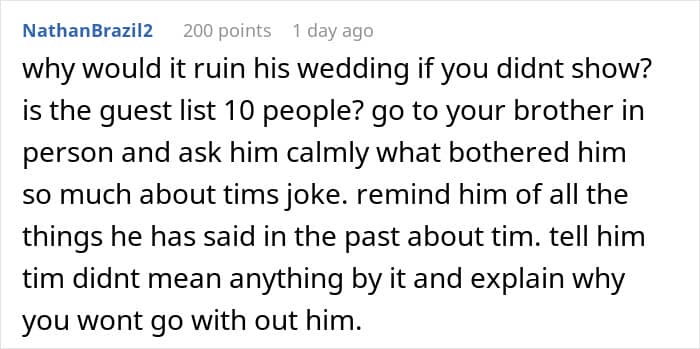
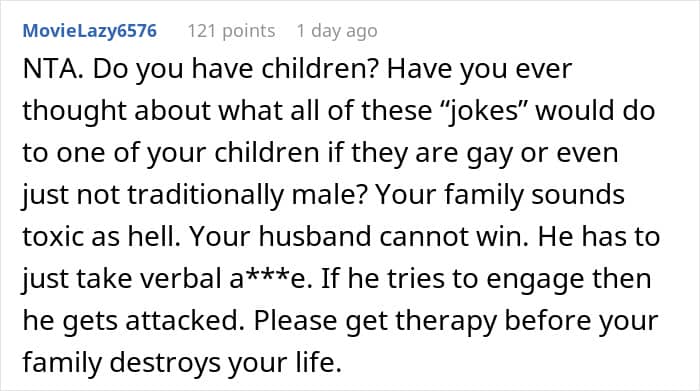

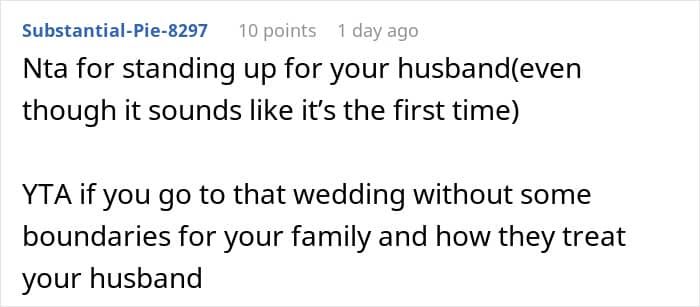
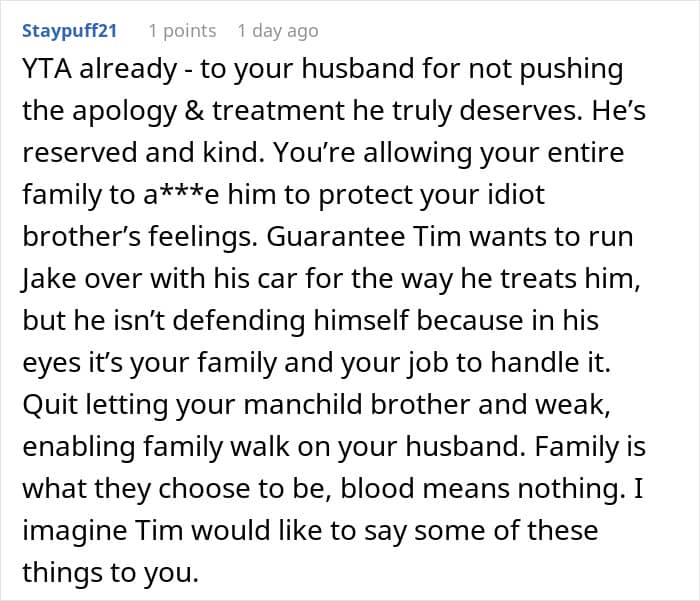
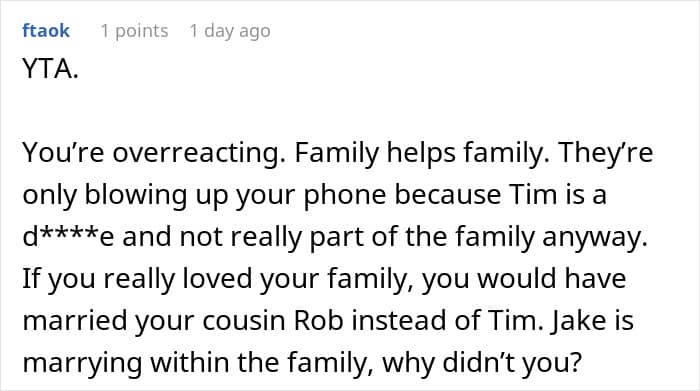
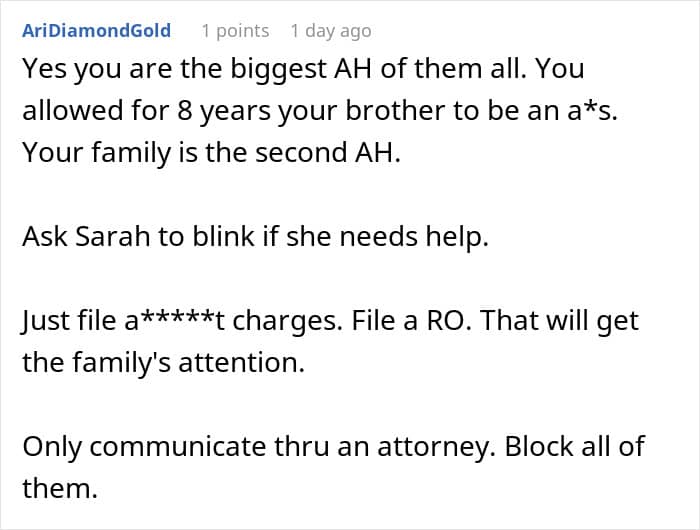
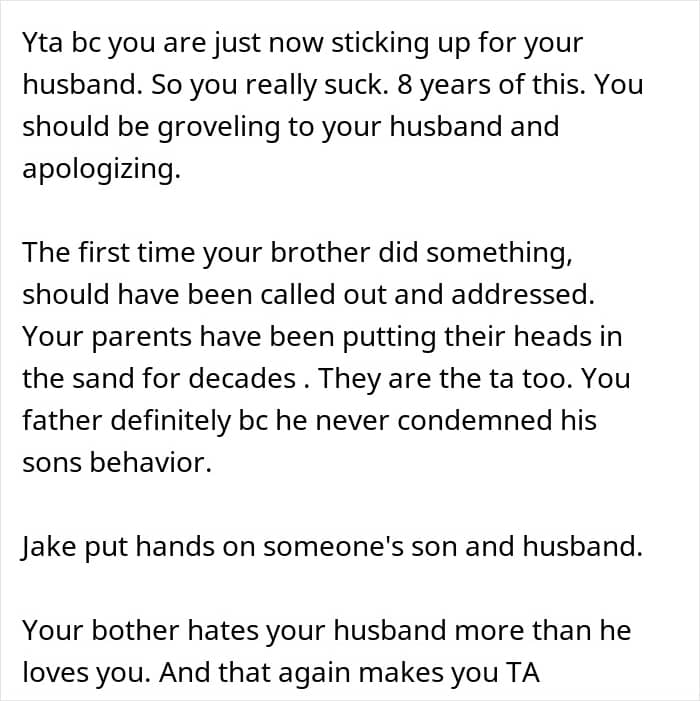
Others, however, argued she was the one in the wrong